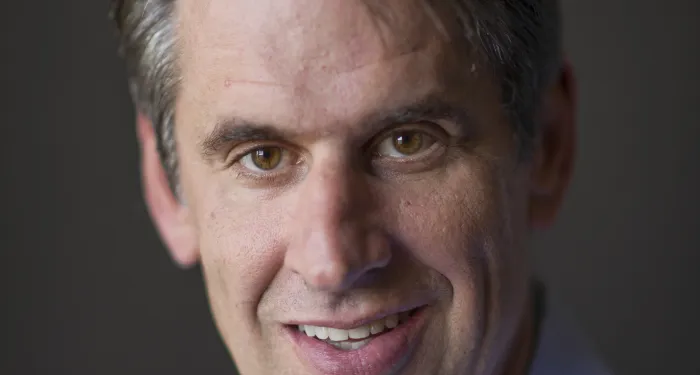
Bill Gurley
‘Running Down a Dream’ Rethinks Career Advice
Legendary VC Bill Gurley challenges 'follow your passion' and other career advice tropes, and shares a smarter way to build a successful career.
What if the advice we've all heard is wrong?
Tropes like "follow your passion" may sound good, but they can also lead people to bad careers with low pay and high frustration.
That's why this episode feels so essential to me.
Our guest is Bill Gurley, who is one of the most successful venture capitalists of our time. He's known for early investments in major companies like Uber, Grubhub, and Zillow.
Bill is also now a published author.
He could've written a book about investing or markets. It would have sold. But he didn't. Instead, Bill wrote Runnin' Down a Dream — a book that tries to help people find work that truly fits them.
Not through clichés. Not through magical thinking. But through real stories of people who built extraordinary careers in a wide variety of fields.
During our conversation, we discuss:
- Why the "safe" career path might not be safe anymore
- Why people who love their work keep learning (and others don't)
- The surprising power of peer groups and shared ideas
- And why a simple thank-you note can change your career
As you'll hear, Bill is not arguing that everyone should recklessly chase some fantasy. He's making a more interesting case than that.
He argues that fascination matters. That engagement matters. And that people do better work, keep learning longer, and build stronger careers when they are deeply interested in what they do.
Bill and I will also talk about the power of mentors. In my opinion, by writing this book, Bill has chosen to mentor thousands of people — perhaps including you.
I hope you'll take the next step and enjoy our conversation with Bill Gurley.
04:12 - The Courage to Pursue a Dream: Why Bill wrote a career guide instead of an investing manual.
11:30 - The Coddling of the Career: How the "college industrial complex" prevents us from finding what we truly love.
18:45 - Runnin' Down a Dream: The origin of Bill's legendary presentation on professional "edges." Watch the original talk here
25:10 - The Peer Group Principle: How to build a "support group" of people chasing the same dream.
33:20 - The $0 Career Tool: Why the simple thank-you note is the most underrated weapon in business.
41:15 - The Crazy Good Turns: The story of the mentor who changed Bill's life.
FRANK BLAKE:
So I'm going to start. There's a little preamble to my question because I think your writing and publishing this book is a crazy good turn of its own. Because if you had asked me, "Okay, Bill Gurley, one of the world's most successful investors ever is going to write a book." I would assume that book would be heavy on your biography, what you did, all the rest, and how you did it, a lot of investing tips and that kind of stuff. Instead, you wrote a book and you could correct me, but as I read it, I think your book is really about giving people the courage and confidence to pursue a career they love. So if that's a right reading, why and why that topic?
BILL GURLEY:
I kind of fell into the idea about 10 years ago. I was reading a bunch of biographies. I think a lot of people go through a phase. Well, first of all, you get addicted to reading and then I think if you're addicted to reading, people go through a phase where they read biographies. And I read these three biographies of people from seemingly far away fields from each other who all started on the bottom rung and were highly successful. And maybe part of the reason why I love being a venture capitalist, seeing the company at PowerPoint stage turn into a big global phenomena and being along for that ride. I've always had this closet obsession with American Idol. I like this kind of from zero to wild success story.
And I put it together as a presentation and I gave it at the University of Texas to the NBA program. They put it on YouTube and a few people noticed it, one of which was James Clear. And so I had a few people, and then I started getting feedback from people that saw it and how it impacted their lives. When I decided to declare victory and hang up my cleats from the venture world, I was thinking through a lot of different things I would do with my time. I stumbled on this book, Strength to Strength. I don't know if you've seen that book from Arthur Brooks.
FRANK BLAKE:
Yeah.
BILL GURLEY:
And I just decided that it would be way more fun and exciting to go do this book, which could touch a lot more people than to write a book that would help tomorrow's VCs be better VCs, which I just didn't have a calling to that. There's this great quote that life begins where your comfort zone ends. And this was more of that for me. And so, combination of wanting to give back, wanting to try an artistic expression, try something I haven't done before, all those things I just felt a calling to this versus that. The other thing, I had zero interest in doing, zero intellectual interest.
FRANK BLAKE:
Well, it's a great giving back. And I was shocked by the statistic early on in your book that something like 60% of people are dissatisfied with what they're doing. Is that right?
BILL GURLEY:
The question we posed was, if you could go back in your career, start over again, would you do something quite different? And 60% said yes. So people are getting to the end of their lives... Or the poll was actually done across adults, across ages, but people get out there and they're in a career and they don't necessarily love what they're doing. And on top of that, I think as we get older, and Daniel Pink has written about this a lot, the regrets of inaction weigh more on our brains than the regrets of action. A regret of action is, "I did something. It didn't work out. I made a mistake." Humans are amazing at forgiving themselves for those things, but the thing you never tried eats away at you, this kind of path untaken. And I certainly, one of my core objectives of the book is to give people the permission, the confidence, and the methodology to go try that thing they've always wanted to do.
FRANK BLAKE:
So it feels like we've kind of gone full circle on the advice of follow your dreams and passion. That was advice. And then everybody started, not everybody, but a lot of people started debunking that advice, including people that you highlight in your book. And it was, "Yeah, for God's sakes, don't follow your dreams. That's not going to take you anywhere." And then you're coming back at it. And how do you view that round trip? What's missed in the debunking or misunderstood of the initial principle?
BILL GURLEY:
Well, I think two things happen, Frank. One, we built this college industrial complex, and I think every parent that's been on this ride knows something quite not right with it. By the time you're in sixth grade, a parent's worried about what your college application's going to look like. And so you're taking chess lessons and lacrosse lessons and foreign languages, and you're volunteering at the local dog pound. And these kids are scheduled beyond belief. And there's a chapter in Jonathan Haidt, The Coddling of the American Mind called the decline of play. And we're just not allowing the time for the young children to really find what they're fascinated with. And then we push them towards safe jobs. And that thing, as a parent myself, I don't think you can get that voice out of your head that, oh, you want them to be economically stable.
And so you push the sure thing, jobs, the lawyers, doctors, used to be computer scientists. There's a really weird thing now where the jobs that felt safe may not be so safe. But I think the whole notion of pushing someone to a safe job may have... In addition to the data from our survey, the Gallup data from this 2023 poll said over 50% of people don't feel they're engaged at work. This was the whole quiet quitting meme that was out there. And so you have a lot of people that are in roles that they're not particularly excited by and it's just not a great...
And those may be the ones that are really the sitting ducks for this AI wave, because if you don't have passion for what you're doing, then you're not really searching for the nuance in your field. You're not pushing yourself to the edge. The other thing I would say is all the methods in the book, which once again, I borrowed from wildly successful people that had thrived in all these fields, they're all 10 times easier if you're fascinated by what you do, like connecting with mentors or peers or continuous learning. All these things make you excited if you're fascinated by what you do. If you're kind of bored with what you do, are you going to continuously learn? Are you going to go home at the weekend and try and... I guess it was Stephen Covey had the sharpen the saw habit. Are you going to do that? Are you really going to do that if you don't love what you do? I don't think you're going to do it. You're going to go watch Netflix.
FRANK BLAKE:
Right. I mean, there are great stories through the whole book that I know all our listeners will learn from, but the parts that at least for me were the most impactful because you go from famous musicians like Bob Dylan to restaurateurs. I mean, you cover a lot of different fields, but the most interesting stories were the people I'd never heard of and the people that you'd go, "Okay, well, this person isn't going to be an actress, but they could do something that they're passionate about in and around that field." Talk a little bit about some of those folks and what you learned from them.
BILL GURLEY:
I'm smiling for the audio listeners. I'm going to tell an inside baseball story based on what you just said but let me... The book is written in a... I'd call it an innovative form, which it's full of profiles, which are stories of success and principles, which are tools of success, and we interleave them. So you get one chapter of one and one chapter of another, and it's meant to make the book more readable and impactful.
FRANK BLAKE:
Totally. It moves right along and they're great stories. It's great as a learning tool because you're not even knowing you're learning.
BILL GURLEY:
Yes. And Morgan House, who wrote The Psychology of Money, talks about how important narrative is. And so all that was intentional. But the reason I'm smiling is I'm fortunate enough to know Malcolm Gladwell, and early on I had an outline structure and I was talking to him and he said... Bob Dylan was in the original presentation. He says, "For all the incremental stories, do someone people don't know as well." So he intentionally guided me in that direction, which is why I'm smiling. Look, all the stories... I probably read with a researcher over a hundred biographies after the video to try and make the book better. And we threw out anyone that was successful in consulting, lawyer, doctor, Wall Street. We didn't want these jobs that everyone knows are safe, none of those. They were all in fields that your parents would probably tell you not to go chase.
FRANK BLAKE:
Right, all wisdom would be, "Steer clear."
BILL GURLEY:
Yeah. Every one of them. We took from those [inaudible 00:13:36].
FRANK BLAKE:
You may be tall, but you're not making it to the NBA.
BILL GURLEY:
Yeah. The other thing we wanted was someone who had high intent. So they had made a decision to go do this because I think that's helpful to someone who's starting anew. You want to know that it wasn't an accident, that there was intention. And then we wanted people that started on the bottom rung of the ladder at the very bottom. Two of the people, Danny Meyer, the restaurateur and Jen Atkin, this famous hairstylist, they both took a trade level course. Danny Meyers found a restaurant management course in a magazine on a street corner in New York. Jen went to a cosmetology class offered by the city of LA for free. That means anyone can sign up and walk in the door, right?
FRANK BLAKE:
Right.
BILL GURLEY:
So that starting on the bottom rung, I thought was just super powerful also for people to believe, to take believability away from this and that you can work your way up from the very bottom. So that is the common thread that went through all the stories, those things.
FRANK BLAKE:
I mean, my reading of it is there's also a lot more room than you'd think. I mean, if you have something you're really interested in, you don't necessarily have to be the person who'd be on the stage.
BILL GURLEY:
Absolutely. And you were hitting it. Yes, there are fields where people perceive that in order to be a part of them, you need to be this hyper-talented individual. And I would include athletics. The restaurant business, if you think you have to be a great chef, and Danny kind of entered with that original thought and moved away from it. Hollywood, sports, all of these fields are super interesting. And there are probably hundreds of jobs for every talent role in those businesses. And so if you're interested in them, you shouldn't be afraid of them just because you're not that talent.
There's so many jobs in all of those fields where you can make an impact. And the other thing I would say that this could be a factor of how competitive it is to get into college and whatnot, but some people come out pretty sharp elbowed and they're kind of climbers through the system. In almost any field out there other than maybe downhill skiing, there are tons of winners. There are just lots and lots and lots of winners. And if you recognize that it's not a zero-sum game, it opens up your mind in terms of how much you connect and share and collaborate with others in a way that wouldn't be your instinct if you've been taught to step on everyone and climb to the top on your own.
FRANK BLAKE:
So your book has six principles, six themes that you work through. I'd say the first two relate very much directly to, "Gee, if you love what you're doing, working on it's going to be a pleasure for you." There are a couple that I don't know that people would trip to easily, and one was embrace your peers. It was exactly the point you were making and that knowledge sharing pays off where our instinct is, "No, for God's sakes, I want to hold as close to the chest as I can, the knowledge that I have."
BILL GURLEY:
Yeah. And look, many of the greats are sharing ideas constantly. So Warren Buffett has his annual letter, Bezos had an annual letter. Howard Marks, a great bond investor, writes constantly. I was fortunate in my VC career to have a blog post where I was constantly sharing. And I think part of the reason people share is when they write things down, they tend to get the ideas more well-thought out. But the truth of the matter is, the notion that you have this kind of proprietary content that you're going to use to execute above and beyond everybody else, it's a bit silly. And information is moved so fast. Ideas really are... It's very easy. I saw this with founders all the time. They'd be, "Oh, they stole my idea." "No, they're just 10 people that thought of the same thing at the same time." You don't have a monopoly on insight.
And if you open up and share, people will share back. People will respect you for being informed, you'll have more connectivity. And these peer groups that I recommend, and basically what I'm saying is, even if you're at the very bottom, find four or five people that have the same dream that you do that are fascinated by the same thing that you are and are trying to climb the same career ladder and connect and constantly share ideas and share your network. All of a sudden, your learning's going to accelerate. Your network is going to be four times bigger than it was. Your chance of having a luck event go way up if you have that kind of situation. Those groups will be remarkably helpful on bad days as a support group, which everyone will run into and everyone needs. And we have some great stories in the book.
FRANK BLAKE:
Terrific stories. And I got to say...
BILL GURLEY:
They borrow from this concept.
FRANK BLAKE:
Terrific stories. And I think that is a principle you're not going to find remotely in any other book on this topic.
BILL GURLEY:
It is the one I'm most proud of just because I think... And the detail with which we go into how to do it, and then showing these people that used it to get to unbelievable success. I mean, you were a great CEO. As a venture capitalist, one of the things that I tell the founders that are learning to be CEOs, because it's a hard journey, is this very thing. Find four or five others that are on that exact same journey as you and connect because you're going to have questions constantly. You're going to run into problems constantly. And a mentor is a bit of a weighty relationship. You don't want to just hit them constantly. The peer group can have a text channel on WhatsApp and just go, bom, bom, bom, bom, bom, bom, bom. No dumb questions all the time.
FRANK BLAKE:
Right. And interesting, you wait until the very, very end of the book to give any biographical information on yourself, but that section was also very interesting. But it was interesting that your peer group at a young age were people who all sort of individually went off and became very successful.
BILL GURLEY:
That's true. And that's the group that I hung out with in college. You're bringing up a good point. I think there's this other element of having a peer group that you root for. Success begets success. And when you see other people you know being successful, I think, and that you truly respect and like not only you root for them and you get kind of emotional energy from them being successful, but I think it also raises your own game internally. There's this peer... I don't want to call it pressure, but I think when you see other people you know being successful, you think, "I can do that too." I think it gives you optimism.
FRANK BLAKE:
So another one of your themes is the value of mentors. You touched on it briefly. I love the fact that you add in a quote that there's a moral urge to be a mentor. That is, I think, a really important point. I'm curious, who do you choose to mentor? Because you must get a lot of folks who would say, "I would love to have Bill Gurley as a mentor of mine."
BILL GURLEY:
Yeah. So one thing I did, I, early on would just get hit constantly by people that wanted to get into venture. And I wrote a three-page PDF that was titled, So You Want to Be A VC. And first of all, I told them all the things about the job that... You know the old metaphor of an iceberg where people see the tip, but there's 90% of it's underwater and you don't see it. I kind of pulled the curtain back on the job because I think it's misperceived what your day-to-day activity's really like. But I put that in there.
But then I said, "If you really want to get into venture, you need to do step one, step two, step three, step four. And when you get through all those steps and you have refined questions, come back to me and I'll talk to you." And that letter was quite filtering. You'd be surprised how few people who made it back. That wasn't really the objective, but it was a useful way to kind of filter down to the people that really cared. And there were some that made it through, and those are the ones that I spent the most time with.
FRANK BLAKE:
So I always look on a book on when they have a quote, what's the opening quote in the book, what's setting the tone of the book and your opening quote is a really interesting one. It comes to a song as, "Did they get you to trade your heroes for ghosts?"
BILL GURLEY:
Yes.
FRANK BLAKE:
Which is kind of ominous in it's way in suggesting... I mean, there's a lot packed into that quote. This is a difficult journey. There's some opposition. How do you want people thinking about that?
BILL GURLEY:
So it's a Pink Floyd quote, of course. And the reason it spoke to me for the book is, it kind of goes back to this safe job versus what you really, really love and want to do. And so the hero in my book is the dream job that you've always... "Boy, if I could do this for a living, I'd be tickled pink." And I was fortunate. I ended up in that place for myself, venture capital was that thing. And the ghost would be do that safe thing, get this job. You started by asking about, "Do what you're good at versus do what you love." And there are plenty of smart people that recommend the latter. But I think that's the ghost in my world. You get out there, you grind through high school, you grind through college, and then you're out doing this thing that you're not particularly fascinated with. And those are the ghosts from my perspective.
FRANK BLAKE:
And how do you want people to think about the trade-off? Because there is some trade-off with the safety versus the uncertainty.
BILL GURLEY:
Yeah. Although AI is certainly pulling back the curtain on whether it's actually safe, which it wasn't the intent of why I wrote the book, but it is a reality that's out there. One thing I would add to the discussion that I think comes along with doing something you love, the amount of collaborative excitement with other people in your field is really high. And then if you're successful, the impact that you have is really high. Almost everyone in the book would go on, not to just inspire a whole bunch of people, but touch a whole bunch of people. Danny Meyer, the restaurateur, your audience may or may not know who he is. He has a great book called Setting the Table. If anyone is in any hospitality business, they should read. But Danny launched 10 of the most successful restaurants in New York and then launched Shake Shack on top of that. But if you talk to chefs around the country and they've ever rotated through a Danny Meyer restaurant, they brag about it and it puts this smile on their face.
It's like a part of who they were. And I just think that's so great that Danny could have that kind of impact on people. One of the other profiles in the book is Bobby Knight. And a lot of people have this perception of Bobby Knight from throwing the chair and the anger and stuff like that. But he probably has the densest, longest coaching tree in the history of the sport. And a coaching tree is the number of people that worked under you or played for you that went on to be a coach themselves. And I think there's a Wikipedia page that lists all of them, but it's unbelievably long.
And I think it ties to the sharing of information thing. He learned early in his life. One of his coaches got an idea from a coach that they ended up beating, and he wondered for a moment, should the coach have not shared that, but then came to realize that that's not the right attitude, that you want to be a part of something and that everyone should try and strive together to be as great as they can be. And so he had this... I call it a boat wake almost of their career, but I think it may be the best way to evaluate whether someone had a great career is just how many people's lives they touched and kind of leave behind. I don't think that's possible if you're in a job where you're good at it but don't really love it. I just don't think you're going to leave that same kind of wake.
FRANK BLAKE:
That's a great point. And your last principle, which to me is one of the most important, is always give back. Why? And also, can I just say, I believe that is correct. I don't see that as a signature of Silicon Valley. What am I missing?
BILL GURLEY:
Well, I'll tell you one thing about Silicon Valley that you may be missing, which is I've never... I've read another place I'll mention that's similar, but when you arrive in Silicon Valley and start asking for help, the number of people that take the time to listen and share is miraculous. The number of people that say yes, I don't know if it's because so many people are arriving from outside. It's very rare in Silicon Valley to meet someone that grew up there. So you have a lot of people coming in from outside. Everyone has a lot of questions. Most people that made it up in Silicon Valley were the beneficiaries of people sharing in this way. And so I think there's a natural instinct to give back. So it may not be something you see. It's not like maybe they're out being ultra altruistic, but the day-to-day behavior in Silicon Valley around mentoring and helping is really high. And there's a documentary on Netflix about songwriters in Nashville, and it sounded eerily similar.
FRANK BLAKE:
Oh, interesting.
BILL GURLEY:
Like someone showing up for the first time that goes to a workshop and there's someone on stage that won multiple Grammys and they take the question and listen, they respect the art. And I think that's part of what it is. If you have people that respect the art of what you're doing. Now, back to your original question, why do I think it's so important? I think if you get into a mindset, and I'm not talking about when you're 22 feeling the need to solve world hunger. I'm just saying, if you get into a mindset early on of just being grateful and thankful for everyone that's helped you and get in the habit of sending thank you notes, and when you achieve something think, "Well, okay, if I achieve this, it's not just because of myself, it's because I had a help from these people in my past." And fire off notes.
The amount of positive energy you get from doing that, I think it's part karma, but you could even make an argument that it's a purely self-interest because you're going to develop so many deeper relationships and you're going to have people rooting for you in a way. You're going to make that mentor more thankful that they became your mentor because you took the time to give them that recognition. And if you get in that habit, once again, your connectivity's going to grow, your power of learning's going to grow, that network that's behind you is going to grow. And it's not that hard to do. It doesn't take that much energy to do those things. And you just get in a really good mindset.
FRANK BLAKE:
I got to tell you, for those listening, that may be the single most important thing they'll ever hear in there. And I know it was in my life, the single most important thing, and it's a huge impact. And I see it with people who have successful lives. I mean, whether it's the career is successful or not, always it helps you with a successful life. I do believe that.
BILL GURLEY:
I agree.
FRANK BLAKE:
I do believe that. And as an interesting side note, it was interesting that the chapter you write on your own biography, your own story, basically reads like an interesting set of thank-yous to a lot, a lot of different people. Is there anybody in that list that you thanked that would be surprised that would say, "Oh gosh, I never knew I had that impact on Bill's career or on his life."
BILL GURLEY:
I don't think so. I don't think so.
FRANK BLAKE:
Yeah, you let them all know it.
BILL GURLEY:
I did let them all know. And I have an anecdote in the story about a professor at Texas, Jim Fredrickson who was the best professor I had in my MBA program and really changed how I think about things, how to approach difficult problems. But I told him four or five times what an impact he had on my career. He passed away early, unexpectedly. And the reason I included it in the book is because I went and spoke to his wife afterwards, and I just didn't have this regret of having not told him. I mean, it's horrible that he passed away early, but I think it was... I considered it wonderful that I had taken those shots and shared with him.
FRANK BLAKE:
So the process of identifying who you would highlight in the book must have been a really difficult process. I mean, you talked about not having the folks in the safe careers, but it must have been a high bar where there's...
BILL GURLEY:
The intent part crossed out a lot of people because some people wander into their dream job, which is an okay way to get there. And in fact, in the Chase Your Curiosity chapter, we talk about how to intentionally wander. And so I think that is a way to get there, but I wanted for the book, for the stories to have this moment of intent, just because I thought it would matter more to the readers that were trying to get to encourage to go take this leap, the intent early on.
FRANK BLAKE:
Is there anyone that you left out that you'd say, "Oh gosh, if I were redoing this, I'd put this person's story back in."?
BILL GURLEY:
I was reading or listening to Greenlights by Matthew McConaughey after we finished a book. And there's a moment in that book that epitomizes what I want the book to accomplish, which is he had told his dad he wanted to be a lawyer his whole life. His dad had told their friends. It was kind of the expectation. And he got to the University of Texas and started hanging out with people in the film school and decided that's what he wanted to do. And he had this moment where he had to call his dad and he put it off and he put it off and he put it off. And he got his dad on the phone and he told him and his dad paused for a second and a half and then he said, "Well, don't half-ass it."
FRANK BLAKE:
That's great.
BILL GURLEY:
And McConaughey said it was the last thing he expected and the best thing he could have possibly said because it gave him not only permission, but responsibility. And I hope the book can do that for a lot of people. And I don't think what his dad did is easy. I've talked to parents. When the kid's tilting at something that appears quixotic, your tendency is to want to say, "Are you sure?" And there's a big difference between radical support and not... You can not be saying no, but you could be hitting it no.
FRANK BLAKE:
So I was going to ask that as a parent. So you've referenced it a couple of times. How did being a parent affect your approach to the topic?
BILL GURLEY:
Well, I had thought a lot about the topic before my kids got into that kind of young adult age, but I think I just became hyper aware of this process we're putting these kids through. Like I said, I bet if we could poll most adults who are trying to get their kids into these colleges and in this game we all play, I bet they don't feel comfortable about it. You do it, you get lined up and you do it because it's a game on the field, but it doesn't feel that natural really. And I think people feel like they're doing unnatural things to try and win this game of getting into these colleges. And so, I've tried to be as open-minded and supportive of whatever it is that they want to do and try to encourage them to chase the things that fascinate them. And there's already been a few turns and it feels fine.
FRANK BLAKE:
So I know there are a lot of folks that you thanked in your book already, but on this podcast, I always ask every guest the same question. Who in your life has done a crazy good turn for you?
BILL GURLEY:
The answer to that's probably Frank Quattrone, so the famous Wall Street tech banker. When I was in my second job, which was a Wall Street analyst, I had come to the conclusion that I was going to no longer... I asked myself this question, which I did twice in my career, which is, "Do I see myself doing this 30 years from now?" And in both cases, as an engineer and as a sell side analyst, I got to a no in my brain and I knew that I didn't want to do it forever. So I put my antenna up and started looking for the next thing. And I was very interested in venture capital. And right around that time where I made this decision, Frank Quattrone left Morgan Stanley and was starting a new investment bank attached to Deutsche Bank, a new tech investment bank. And he got ahold of my name and called me and we sat down.
And I talked to some peers and mentors of mine who said... I was like, "Who's this?" And they said, "Oh, you must meet. Must meet. You have to take the meeting." And I said, "Well, I don't want to do this." "Take the meeting." So Frank asked me to continue being a sell side analyst. And I told him I had arrived at this conclusion that I didn't want to do it for 30 years. And he said, "What is it you want to do?" And I said, "I'd love to be a venture capitalist." And Frank said, "Come to work for me as a sell side analyst. I'll move you to Silicon Valley and I'll introduce you to every venture capitalist that I know." And he knew them all. And I took that trade. I was only working for him for 13 months before I got a venture capital offer, but we're lifelong friends. But that story's pretty amazing because I went in knowing the role he was interviewing for and told him I didn't want to do it, and he solved the problem anyway. And that was a crazy good turn for my career, for sure.
FRANK BLAKE:
That is wonderful. You've achieved just incredible success in your career. This book is one more. I mean, it really is great. We're going to let our listeners get copies of this book because it's fantastic. Do you have some other goals or is it... I mean, [inaudible 00:38:38].
BILL GURLEY:
Yeah, I do actually. So the book Strength to Strength that I mentioned from Arthur Brooks is really written for people that are kind of in my stage of life who have done the thing they set out to do and are now wondering what to do with the rest of their days on the planet. And I originally had a bunch of ideas about what that would be that were mostly wrong. And I went out and talked to other people and I just... People manage their own money or they angel invest, all these things that I thought were going to be on my list and I slowly crossed them all off. And the book is just really good at encouraging you to do things that might have the biggest impact. And so I'm going to go tilt it at a policy institute, Frank which I hope can borrow from my ability to synthesize ideas and communicate and try and come up with some solutions for some really big problems. We'll see how it goes.
FRANK BLAKE:
That is brilliant. And then for our listeners who want to keep track of you and know what you're up to, where should they go?
BILL GURLEY:
I think the best place is tracking me on the X platform, formerly Twitter. My handle's B Gurley, B-G-U-R-L-E-Y.
FRANK BLAKE:
Well, Bill, I can't thank you enough for doing this. Your book is phenomenal. This is just great and congratulations. Thank you.
BILL GURLEY:
Thanks for having me on, Frank.
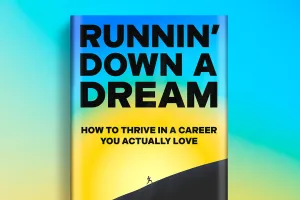
Enter to win a FREE copy of 'Runnin' Down a Dream'
FRANK BLAKE
My Sincere Thanks
Because of listeners like you, our show now ranks among the top 5% of most-downloaded podcasts by volume per month.
Your support has helped take our little idea to celebrate generosity and good deeds, and turn it into one of the most listened-to podcasts available.
Thank you for being part of a community that celebrates people who do good things for others.
Your giving of your time to listen to these interviews, and acknowledging those good deeds, is a crazy good turn of its own.
Please help us continue to grow by subscribing on your preferred podcast platform.
And please, help us spread the word by sharing our show and website with friends.