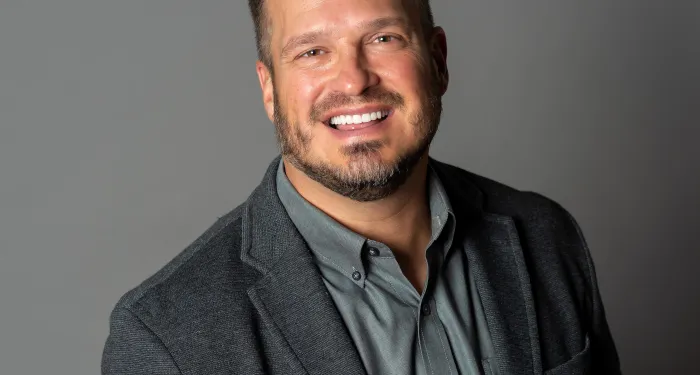
Luke Mickelson
The Kids Without Beds
How a simple garage project turned into a national movement. Sleep in Heavenly Peace has helped more than 300,000 kids sleep better at night.
"It's not a real word. But it is a real problem."
That's how our latest guest explains "child bedlessness."
Luke Mickelson coined the term during his 14+ year journey to help kids who don't have a proper place to sleep.
He's the founder of Sleep in Heavenly Peace, an organization that builds beds for kids who don't have one.
It started in his garage. And it's grown into a national movement.
Today there are:
- Nearly 400 Sleep in Heavenly Peace chapters across the country
- Some 300,000 beds delivered — including 90,000 built last year alone
- And over 150,000 kids still waiting
It's a remarkable story—one that involves a little bit of inspiration, a little bit of luck, and some pretty smart strategic choices along the way.
In this conversation, Luke and I discuss:
- The moment he discovered that kids in his own town were sleeping on the floor—and why that was so shocking
- The Christmas project that helped Luke see poverty through the eyes of a six-year-old
- How TV personality Mike Rowe got involved—and propelled the organization to national attention
- What actually happens at a bed build—and why volunteers keep coming back
- What it means to have more than 150,000 kids on their waiting list—and what they plan to do about it
It's pretty amazing that one person can start what feels like a small project—and grow it into something that impacts so many kids across the country. I think you're going to enjoy hearing about it. Press play to listen.
- 04:12 - The Garage: Why so many great American stories begin there.
- 08:45 - The Discovery: Realizing "bedlessness" was a crisis in a town of only 4,000 people.
- 12:30 - The First Design: How Luke measured his daughter's bed to build furniture for the first time.
- 17:15 - Haley's Story: Seeing the impact of a bed through the eyes of a six-year-old.
- 23:40 - Avoiding "Mission Creep": Why saying "no" to other needs helped SHP scale to 400 chapters.
- 31:20 - The Mike Rowe Effect: How the Returning the Favor program launched 125 chapters in one year.
- 40:05 - More Than a Bed: The physical and emotional weight of a good night's sleep.
FRANK BLAKE: Yeah. So I want to start, there are so many fascinating elements of your story and the amazing things you've done, but one of the things that struck me was how common it is for great American founding stories to start in a garage. And so, I would love for you to share with the audience how you started in a garage with Sleep in Heavenly Peace.
LUKE MICKELSON: You know, it's funny, Frank, you're not the first person to say that.
FRANK BLAKE: I bet not.
LUKE MICKELSON: The last person that said that to me was Mike Rowe.
FRANK BLAKE: Oh, no kidding. All right. Well, I want to get into that in a little bit.
LUKE MICKELSON: Oh yeah. First of all, thank you for having me on. This is extremely important to our mission, is extremely important to the growth of what we're trying to do, which is end child bedlessness, and so it starts by sharing the message and spreading it out to everybody. I grew up in a small town called Kimberly, Idaho. It was about 4,000 people. And the beauty about living in a small town is you know everybody, and the bad thing about a small town is you know everybody. But the nice thing about it obviously is you get to bond with everybody and you care more about people, I think, because in my high school, I knew every single person, and so you develop a lot of friendships very easily, and I think that's played a big role in how SHP went from my garage to what it is today. And so, I attribute a lot of my youth and living in a small town and being an athlete that played all the sports and had all the teammates and all that stuff really plays a big role in the growth... Well, the start, really, and the growth of SHP. To get into it, in this small town, I went to college and went and served a mission and did all the things. I eventually ended up at work back in my small town, and part of living there, I coached football, I had a good job. And in my church service, I held a position called young men's president, basically kind of like a youth pastor in the South, although I don't consider myself a youth pastor. But I do work well with the youth, I love working with the boys, and I was over the boys group ages about 12 to 17. And part of this responsibility was the spiritual growth and teachings to the kids, but also the activity arm. So during the week, me and a few other leaders had to come up with activities for these boys, and the church at the time had adopted the Boy Scouts program, so basically, I was the leader of the leader of the Boy Scouts. Well, part of this position, about every other week, I would meet with other church leaders and auxiliary leaders and we'd talk about what's going on in the community, we'd talk about the congregation and the people we were helping and whatnot. And one particular family came up one meeting that caught my ear, and the reason why it initially caught my ear was because they lived in an apartment complex in my little small town I didn't even know existed.
FRANK BLAKE: Wow. Wow.
LUKE MICKELSON: Trust me, I rode my bike everywhere in that town and I thought I knew... But no. So at first, it caught my ear, like, "Wait a minute, where is this place at?" And then, one of the leaders that had visited the home and assessed what was going on, almost in passing mentioned that the kids didn't have any beds, amongst other things, they were helping with food and stuff. But when they said that, it really struck me. I said, "Wait a minute," I actually stopped the meeting, I said, "Wait a minute, when you say they don't have beds, certainly they've got air mattresses or something like that?" And the leader said, "No, they literally just are sleeping on the floor on blankets." And Frank, that hit me so hard. I was like, "Really?" I remember spending one night on the floor as a missionary, and it was terrible.
FRANK BLAKE: It's hard, yeah.
LUKE MICKELSON: Yeah. And to think about these kids going day in and day out... And I had kids of my own. So that first struck me. And then, another inspiration hit me, as a leader of teenage boys, trying to find an activity that's fun, that doesn't involve a screen or a computer or a game of some sort, is not an easy thing nowadays. And so, I thought, "Oh, this is great, I can get an Xbox controller out of these boys' hands and put a drill in it and we're going to teach them something." I got excited about it. And so, that night, I went home, and my daughter had a bunk bed, so I measured what that was like, and with a few tweaks, because I was dealing with teenage kids, I had to make this pretty simple, I came up with a design on how to build this bunk bed. I'd never built furniture before in my life. FRANK BLAKE: Seriously? This was just from looking at a bunk bed?
LUKE MICKELSON: Yeah, that's right. I like playing with power tools like the next guy. But this was one of those things where... You know how sometimes you can just see it, you can just visualize? And for me, when I got home, I looked at that bunk bed, it just instantly mapped out in my head, I could see it. And then, I got really excited to build it with these boys. And so, for the next couple of nights that week, that's what we did, we built this bunk bed.
FRANK BLAKE: Of course, there's a part of your story where you go to Home Depot to buy the power-
LUKE MICKELSON: You have heard this story. Yeah, we'll get to that, I promise you. So we had a great time. And I was really worried that, here, we're beginning of December in Idaho, which is not a warm place, and we're in my garage, which wasn't heated, snowing outside, I was worried that the boys wouldn't have any fun. But I actually was really surprised, they got really into it. It wasn't just one night that week, it was several nights that week that they had to come over, and ultimately, we finished building this bunk bed. And kind of a cool thing happened, as the days went through, people started to find out. It spread throughout the congregation and the community what we were doing, and all of a sudden, everybody wanted to go help with this delivery. I had about 20-plus people show up at my house to deliver this bed, and I couldn't allow that, so me and a few leaders, we actually stayed back and didn't go on the delivery, we had to clean my garage, and we let the boys and their parents and whatnot go on this delivery. And so, the next day at church, I got to hear how amazing this family was and these kids, and how excited they were that they got this bed.
FRANK BLAKE: So people arrived unannounced with a bed or what was the process?
LUKE MICKELSON: So they knew we were coming, they knew that we were delivering a bed, we didn't want to surprise them. But the kids were super excited, they didn't have a bed. And so, I heard how excited they were, and I went back later on to see the beds and what they looked like, but I missed the initial excitement. I was excited for the boys, but I was also pretty jealous I didn't get to be a part of that, which played a big role in it, because at the time, Frank, I was 35 years old, I was going through a little bit of, I don't know, well, a big faith crisis, but a little bit of a midlife crisis, almost like a passion, purpose, what am I here for? Honestly, I had been going through it for several years, and it was just getting worse and worse and worse. I didn't have anything to complain about, I had a good job, I was married, I was coaching football, I was in my church services. On paper, I had a really good life, and so I felt guilty that I was feeling this unfulfillment. But when I did this bed-build project, it filled my bucket to the brim and it was awesome. But after it was all said and done, it's funny how life just creeps back in, and all of a sudden, I was sitting on my couch again, feeling these empty feelings and this lack of purpose and whatnot. I remember, I was watching a program with my kids, I had a 10 and a six-year-old at the time, and we were watching Big Bang Theory, and I remember a commercial came on or something like that where they talked about a new game or a new Xbox or whatever. And I think every parent goes through this, especially around Christmastime, you just know the kids are going to ask for this present and you know you're not going to get it for them, it's just not going to happen. Of course, that's what happened, "Dad, can we get this?" And it just hit me, I was struggling, trying to find more happiness and trying to find fulfillment, and I just did this awesome project building this bed for these kids, and now my kids are going to complain about the presents I'm not going to get them when they've got a bed? It was just all this turmoil came together at once, and I remember-
FRANK BLAKE: A representation of modern life, what you just described there, Luke, that's it. LUKE MICKELSON: Yeah, of fatherhood, of struggling with trying to find... All of this came together at once, it was like a perfect storm. And I remember sitting there thinking, "Listen, I can sit here and wallow in my sorrows, I can sit here and try to give myself another pep talk, like I've done many years, or I can do something about this, and I can teach my kids, instead of telling them, I can teach them, I can show them the joys of service, like I showed these Boy Scouts of mine." And so, I didn't say anything, I just got up off the couch and started walking to the garage, and I remember my kids were like, "Dad, where are you going? The program's on." And I said, "You know what? I've got some leftover wood, I'm going to build another bunk bed, and you're going to come and help me." And so, that's what we did. I took my six-year-old daughter, and she got her little pink tutu on and grabbed a drill and started drilling away, and my son, in his Boise State jersey, started pounding away. And for the next couple of nights, we built another bunk bed. The funny thing was I didn't know any other child that needed a bed, I satisfied the only need that I knew that existed. And it really wasn't about finding another, initially anyways, about getting a bed to a child. It was more that I wanted my kids to feel the joy of service. I wanted them to know what selflessness feels like and how happiness, that can bring yourself... And I wanted them to appreciate the things that they had, like a bed. But once we were done, I didn't know what to do with it, so my wife at the time says, "Well, why don't you throw it on Facebook on one of those buy/sell/trade groups, and I think you'll find someone that way." I was reluctant at first, because I didn't want to put a free bed on buy/sell/trade, I'm pretty sure every Tom, Dick and Harry's going to want a free bed. And even though we got maybe a little bit of that, a couple of things happened that just shocked me. First of all, I had a bunch of people, people I knew many, many years ago and people I had never met before in my life, message me about kids and families that had kids that were sleeping on the floor, and not just on floors.
FRANK BLAKE: Really? Wow.
LUKE MICKELSON: Sleeping on concrete, sleeping on pallets, sleeping five or six kids to one bed, sleeping with mom and dad, just horrible conditions that these kids were sleeping in. And the number two was there was a ton of them, way more than I thought existed. And keep in mind, this is a small town. I mean, the town next to us was-
FRANK BLAKE: That's amazing. LUKE MICKELSON: ... about 40,000 people. So really, in a town of only about 15,000 people, I was-
FRANK BLAKE: Twin Falls is the nearest town to you? LUKE MICKELSON: Correct, yep, Twin Falls is the nearest town. And so, I was pretty shocked by that.
LUKE MICKELSON: And I was really looking for... I mean, my post was basically, "Hey, this is a family Christmas project. Me and my kids built this bunk bed. We'd like to give it to a family that have kids sleeping on the floor." To think of a child during Christmastime, really anytime, but sleeping on the floor, I just can't think of that, I want to solve that. Well, a friend of mine gives me a call, and she worked in the social services arena, and she says, "Listen, I've got a family that I want to tell you about," and this is my Haley story. So this is the first delivery, this is the special bed that my kids had... We went on. Haley is a six-year-old girl, was a six-year-old girl at the time, that had never slept on a bed.
FRANK BLAKE: In six years?
LUKE MICKELSON: In six years, she slept in the backseat of her mom's car. They were homeless, basically. And I'm sure once in a while, she probably couch dived on some couches here and there, but she never had a bed of her own. And my friend helped them get their first house, and that's when I first met Haley. I showed up to this house, and you could imagine, I'd seen poverty, I'd seen transitioning homelessness before, but I never really saw it through the eyes of a six-year-old before. I walk into this house, and here's Haley, just happy as a lark because she's got a house for the first time, but the house had nothing in it. I mean, there was no couch or table, there was nothing. There was a hot plate that had a can of soup on it in the kitchen, and that was it. I looked at little Haley and I said, "Hey, why don't you show me your bedroom?" She didn't know why we were there. And so, she pulled me in her bedroom, happy to show me this new bedroom she got... And Frank, you can imagine what this looked like, there was holes in the carpet and tears in the wallpaper, the closet door was gone, it just wasn't a great place, but it was a room. But of all of those things, the most shocking and astonishing thing to me was I looked in the corner and there was a pile of clothes there, and I quickly realized that was Haley's bed.
FRANK BLAKE: That's what she slept on?
LUKE MICKELSON: That's right. She'd come home from school, she'd put her PJs on, she'd sleep on her school clothes, and then in the morning, put her school clothes on and go to school.
FRANK BLAKE: Wow.
LUKE MICKELSON: And I'd never seen that before, and it was really shocking to me. I was almost upset, I was almost mad about it. I was like, "Man, this is going on in my own hometown, this is crazy." And then, that quickly moved to excitement, because we started bringing in the bed, and I watched little Haley trying to figure out what these two guys were doing, making all this racket in her room. Finally, she realized, "Oh my gosh, this is a bed that they're bringing me," and she just erupted. She came over and hugged me and hugged my friend, Jordan, these two guys, these strange guys. She even went over and hugged and kissed the bed. I've got a picture of her hugging the bed. I'd never seen that before, a kid so excited about a bed, it brought me almost to tears. And then, if that wasn't enough, I looked up at Mom, and here's a single mom, and I was raised by a single mom too, and just six years of tears pouring down her face. I knew what each one of those tears were.
FRANK BLAKE: Wow.
LUKE MICKELSON: Just a mom just struggling. Well, she was finally relieved of the guilt and the frustration and the worry about this daughter of hers not sleeping well and not having friends come over. You could just see it in her face. I knew right then and there, okay, this is way more than just a bed. I didn't know what to expect showing up, but leaving, I knew, wow, we provide way more than just a bed.
FRANK BLAKE: Wow.
LUKE MICKELSON: And I remember we had about a 30-minute drive home, and me and my buddy, Jordan, really didn't say much to each other, it was just so overwhelming. Hey, and I'm a farm kid from Idaho, I love hunting and fishing and college football and all that stuff, and I'd loved it for years and years and years. But in a single moment, that moment watching those two mom and daughter sit on that bed, everything changed, none of that mattered to me anymore. The college football on Saturdays, making time to make sure I go hunting and fishing, it didn't really matter anymore. All I wanted to do was solve that problem, because I knew that there was more kids out there. Now, I didn't know how much. I remember we got home and I looked over to my buddy and I said, "You know what, Jordan? No kid's going to sleep on the floor in my town if I have anything to do with it." I was upset. FRANK BLAKE: Seriously? You got your mission statement right then.
LUKE MICKELSON: Right then, right then and there, no kid. Now, I didn't realize what that mission statement really meant and how many kids really were without beds in my own hometown. I had this post that listed a bunch of them, and I wanted to satisfy that need. Remember, from the Facebook post, I was contacted by friends I hadn't talked to for 20 years, and they were like, "Luke, this is a great idea. How can we help? Can I bring a mattress? Can I bring sheet sets? When do you build? Can I come over?" Pretty soon, for about three weeks, my garage was filled with people I hadn't seen forever, complete strangers just showed up to help sand or help stain. It was the coolest thing.
FRANK BLAKE: So you've got a production facility going on in your garage.
LUKE MICKELSON: Oh man, we were rolling.
FRANK BLAKE: Yeah, yeah, that's great.
LUKE MICKELSON: I remember a buddy of mine came over, we had built, oh, probably six or seven of them at this time, he came over and we were pretty happy, we built one bunk bed... Now, this didn't include staining it or anything, but we had built it in two hours. It took us two hours to build it, which normally it was taking us two days. So we were getting faster at it, and we were really excited about that. We were able to build all those 21 beds and deliver them that holiday season.
FRANK BLAKE: Can I ask, this is probably too much in the details, but why bunk beds?
LUKE MICKELSON: No, that's a great question.
FRANK BLAKE: Instead of just an individual bed.
LUKE MICKELSON: It's a great question. So the way I designed it, luckily, and because I needed to make it as simple as possible, I looked at this bunk bed that my daughter had, and I realized all I needed to do is build a bottom bed, and then build the same bottom bed, but flip it upside down, and there's my two beds. And the reason why we did bunk beds is because most... We got a lot of, let's call it, applications, we got a lot of people that were referring kids, and most of them, there was two or three or more to a house. And the more we delivered, we realized that these houses, they're pretty tight quarters, there wasn't a lot of room, and so bunk beds just were, really, honestly, about the only solution we could do to fit two kids in one room. In fact, the first couple of years, we wouldn't deliver anything but a bunk bed because of that. Now, quite honestly, I think it's about 70% of the beds we deliver are singles. They can be bunk beds or put apart in singles. And that became pretty important early on. But like I said, later on, we will deliver a singular bunk.
FRANK BLAKE: So you get this, so the experience with Haley, 20-plus more beds, all before Christmas?
LUKE MICKELSON: Yep.
FRANK BLAKE: Because one might imagine, okay, now I've done my Christmas thing, that now I'm back to whatever I do. What keeps it going forward?
LUKE MICKELSON: Yeah, that's a great question. I haven't been asked that really before. When we finished it and delivered it all, it was great, it was amazing. But that didn't stop more people, number one, reaching out, wanting to help, "Hey, are you going to do this again? Hey, what else do you need?" And we got more and more people throughout the year tell us, "Hey, are you still building those beds? Because I know a family over here." And through the year, I built one or two bunks here and there, but we really, when the second year came around, we wanted to do it again, because this was just a Christmas project, this wasn't anything serious, it was just a Christmas project. We wanted to do it again, but I wanted to do more, I wanted to double it, that was my goal. And my friend, Jordan, that helped me deliver my first bed and his first bed, he wanted to do it up in Boise. And so, we had these two build days, back-to-back weekends, where we built in Twin Falls, and then I drove the tools up to Boise and we built up in Boise. So we built, at that time, we built 50, I think it was 51 beds that second year, and we delivered them both in Boise and Twin Falls. But the thing was, the more we delivered, the more we shared what we were doing, the more people found out about it and the more applications came in. And then, all of a sudden, I started getting calls from Child Protective Services, from CASA-
FRANK BLAKE: Really?
LUKE MICKELSON: ... from foster care. And this is what I learned, which totally blew me out of the water, is these agencies that deal with transitioning homelessness and foster care and these families, when they went to go find a bed for a child, if it wasn't the number one, it was the top three hardest things for them to find.
FRANK BLAKE: Really?
LUKE MICKELSON: Yeah. I had no idea. They could find a washing machine or a refrigerator or a TV easier than a bed for a child. So I became, really quickly, on speed dial for these guys. They loved-
FRANK BLAKE: Are you giving both a bed and a mattress?
LUKE MICKELSON: Yeah, the whole nine yards.
FRANK BLAKE: The whole nine yards, okay.
LUKE MICKELSON: And oftentimes, when we deliver a bed, it's the first bed that the child has ever had, and we're talking child, sometimes 12, 13, 14 years old, never slept on a bed, and they're in bed at 3:00 in the afternoon sleeping.
FRANK BLAKE: Wow. Wow. So you're through the second year, again, it's a Christmas project. When do you go, "Okay, this is going to be more than just a Christmas project"?
LUKE MICKELSON: Right. It's a great question. The funny thing is, the very first year, my wife at the time asked me, she says, "You know, you probably should call this something." And I didn't really think about a name, it was just a fun Christmas project.
LUKE MICKELSON: So I said, "Oh, I've got the perfect name, Beds for Babes," which is a terrible name.
FRANK BLAKE: Terrible name, yeah.
LUKE MICKELSON: And she said, "No, we're not calling it that."
FRANK BLAKE: No, no, no.
LUKE MICKELSON: It was Christmas time, Silent Night is an all time great hymn, and Sleep in Heavenly Peace is really what we wanted these kids to do, and so we named it Sleep in Heavenly Peace. Well, the third year year was coming around and a couple of things happened. Number one, we wanted to do more, but we were financing this all ourselves. I mean, we'd get some friends that would donate some money or time, but this was all coming out of our own Christmas fund. And then, the second thing happened was we started getting calls from companies and organizations that had heard about us that said, "Hey, we'd like to donate money to you. Are you a nonprofit?" And I said, "No." They're like, "I've got a $5,000 check," which was our entire yearly budget, "ready for you if you were a nonprofit." Not necessarily I didn't want to be a nonprofit, it's not that I had a problem with nonprofits, I just didn't like donating money to an organization where I didn't know the money went to or spending my time doing and serving in an area that I didn't know if it was even helping anybody out, really. But I did want to get that $5,000 check because I wanted to do more beds. And so, I did some research and found out how to become a nonprofit and had some help, and so in November 28th, 2014, so two years later, just before our third event, we became a nonprofit. And so, from that, we started receiving more donations, and a couple of interesting things happened. I found out very quickly that not only is child bedlessness, not a real word, but a real problem, not just in my town, but all over. That was the first thing I quickly learned. And the second thing I started realizing is there are tons of people, millions of people, that really want to give back to their community, they just don't know how. And there's a ton of companies that want to give back and want to do service and want to use their employees and use this as a team building exercise, there's just not a lot of organizations that provide all those services, that check all those boxes, but we did. We were able to take 10 or 200 people, put them to work, something meaningful, something that they got fulfillment from, and we were a charity, so their dollars were tax-deductible, and it helped the local community. So all of a sudden, we started getting these corporations calling us saying, "Hey, if I give you a $10,000 check, can I bring my 50 60 employees over and can we build beds?" And I'm like, "Heck yes, we can." And the more we did that, Frank, the more other companies would show up, because what happened is-
FRANK BLAKE: I bet church groups and-
LUKE MICKELSON: Church groups and Kiwanis-
FRANK BLAKE: Right, right, exactly.
LUKE MICKELSON: Lions and all these other organizations, when they found out about us, and not only did we provide a service for the local community, but they could be involved, they could help.
FRANK BLAKE: It's like a manageable version of Habitat for Humanity.
LUKE MICKELSON: 100%.
FRANK BLAKE: Instead of building a house, you're doing a bed, which your house is a long, long project.
LUKE MICKELSON: Correct.
FRANK BLAKE: This is more... And the need, gosh, the need of not having a bed is almost unthinkable.
LUKE MICKELSON: It's an honor to be compared to Habitat for Humanity. We get compared to them quite a bit.
FRANK BLAKE: My wife worked for Habitat for Humanity.
LUKE MICKELSON: Oh, wow.
FRANK BLAKE: Yeah. She actually worked for them, traveled all over the world, building houses in horrible places.
LUKE MICKELSON: Cool. Love it.
FRANK BLAKE: But there is a magic... What you described, it struck, it is the magic of habitat, but absolutely your magic of the connection to what the donor gets building, actually using their hands to build something. I mean, just the act of building something and then giving it away to someone who needs it, it's just great, and it's a lot easier building a bed than a house.
LUKE MICKELSON: Frank, I learned a long time ago, actually by a guy named Hank, he was a volunteer, an old, old guy, he was like 500 years old, this guy was old, and he showed up to a build one day, it was my very first public build, and he had served in other areas, obviously, he was one of those philanthropic guys. Well, he showed up, and I was really worried about him because he was old, this isn't easy work, you're lifting wood and doing... He says, "How can I help?" And I said, "Well, Hank, what did you do for a living?" And he says, "Well, I was a carpenter for 40 years." I'm like, "Oh, I know where to put you." And I put him on the saw. Well, in a build, when there's 60, 70 people there and no one knows what they're doing but you, you're wrapped up putting out fires all four hours. I forgot about Hank. So when the build was done and I realized, "Oh my gosh, this old guy in the back, is he okay?" I ran back there, and here's Hank just covered in sawdust, white as his hair. And I said, "Hank, I am so sorry, man, I forgot about you, I was busy." And he looked me square in the eye, with this grandpa smile, he said, "Luke, let tell you something." He says, "I've volunteered a lot in my life. I've never been to an event, and in five minutes, I was put on an assignment, and it was so important that I don't leave for four hours. I couldn't leave my assignment." And I remember thinking, I even told him, I'm like, "Man, I know, I'm sorry. I was just busy." He says, "No, Luke, no." He said, "Thank you." And right then, Frank, I learned, and we have a saying in SHP, the happiest volunteer is the sweatiest and the dustiest. And I learned, because I was one of those nonprofits that I wanted to make it easy for my volunteers because I want them to come back and I want them to have a good experience, and all I was doing was robbing them of the sense of accomplishment, I was robbing them of the fulfillment that comes from hard work. And now, we don't make the build process simple, we don't make it streamlined, because we want these volunteers to feel fulfilled, we want them to feel that, "You know what? A, I took time out of my day to volunteer, I want to feel like I did something, I want to feel like I made a difference." And you know what? When you come to an SHP build, you do, you feel the physical effects, but you also feel what comes from that, and that's the fulfillment of your work mattered, and your efforts, albeit not easy, really are needed and had to happen. So you get a lot of fulfillment from it.
FRANK BLAKE: Wow, that's extraordinary, that really is extraordinary. For our listeners, one part of Sleep in Heavenly Peace's amazing story, and I'm just fascinated, this is just a fascinating story, we've been doing Crazy Good Turns for a while now and there are a lot of people who do great things for others, most charitable efforts, they get to a certain point, but they're very hard to scale, and the amazing thing about your story is... So if I'm following this right, by 2015, you're still pretty small.
LUKE MICKELSON: Oh yeah.
FRANK BLAKE: And you're now one of the larger charities in the country. I mean, I'm sure you know that. That's incredible.
LUKE MICKELSON: Well, I appreciate that. I get asked a lot, "Did you ever think it would be like this?" I mean, how do you answer that? Of course not. I mean, these are dreams that you don't even dream of. I mean, this was a family Christmas project that uncovered a pandemic that I didn't know, and come to find out no one really knows is a big problem. When we became a charity, I said, "Okay, I don't know how to run a charity, so certainly I'm going to find other charities that are building beds for kids and figure out how they're doing it." So I scoured, scoured the internet trying to find a charity, I found one, and this is 2013, I found one charity that was building beds for kids in North Carolina. It was called Beds for Kids, which I thought was a cool name. That was it. And so, I was completely shocked that there wasn't other organizations, there was probably some church groups here and there that were doing stuff, but there wasn't an official organization that was building beds for kids. So I was bummed, because now I've got to figure this out on my own.
FRANK BLAKE: So on that, and there's so much more to cover here, but on that, were you at some point going, "Okay, now, I'm hitting families that have pretty profound needs across the board, and I step into the home, over the threshold, and I see the need for a bed, but I look around and they've got a world of needs-"
LUKE MICKELSON: Correct.
FRANK BLAKE: ... "do I address this world of needs or do I focus on this?"
LUKE MICKELSON: You're touching on the single greatest reason why nonprofits either fail or don't scale, and it's called mission creep. Now, where I was lucky, Frank, and you're smiling because you know exactly what I'm talking about, when I decided to be a nonprofit, I wanted to go find a nonprofit to realize how to run one, I've never ran one before. So I went to a nonprofit that was in my hometown, it was called East End Providers, just a great little nonprofit, and I called the executive director and said, "Hey, do you mind if I come down and just chew your ear for a little bit, ask you a bunch of questions?" She says, "Come on down." I walked into this house... And keep in mind, Frank, I've got a full-time job, I'm coaching, I'm doing church service, my plate's already full, and now I'm taking on this nonprofit thing. So I walk into this house, and it was floor-to-ceiling, wall-to-wall stuff. I mean, it looked like a garage sale. There was bikes and coats and shoes, everything under the sun. And then, I looked at this little old lady, this executive director, sweetest lady in the world, but she looked strung out, she looked like she was just stressed to the max. And we had a good conversation, but I remember walking away from that, taking one major point away was, "Okay, there's no way I can manage that. I don't have the time, I don't have the energy to do that, so this is what we're going to do. We're going to build beds, and that's all we're going to do." The very first year, we built beds, but we also took food and presents and anything that people would give us, we would do it, because that's what you do, that's how you help. I knew I couldn't do that, so I knew my limits, and because of that, it was the single greatest decision that helped SHP scale. I didn't know what I was doing at the time, but I was actually focusing our organization on the single mission that needs to stay that way, because most nonprofits... Just like you said, a lot of nonprofits start... Well, all nonprofits start by good, warm-hearted, big-hearted people.
FRANK BLAKE: Yeah, yeah, absolutely, yeah.
LUKE MICKELSON: And you go into a house, deliver beds, and you realize they don't have a couch and they don't have food and they don't have all these other things, so the big-hearted person that you are, you want to help. Well, that's what dilutes a mission, and that's what really suffers or inhibits growth in a nonprofit. And it's not easy to do. As we started to scale and bring on chapter presidents, trust me, we had tons of them want to start providing teddy bears and books and desks and all sorts of stuff, and it was hard to tell them, "Look, no, sorry, we don't do that. There's other agencies that do that," and offer them their information, "but we will only build and deliver beds," and that was the single best decision we made at the time.
FRANK BLAKE: So how many chapters do you have now?
LUKE MICKELSON: When we started growing and more people found out, we had friends of ours, friends and family members that lived other towns and other states over, said, "Hey, why don't you come do a build over here?" And I'd say, "Well, why don't you just start a chapter and we'll teach you how to do it and you can do it yourself?" And so, we started building that. There was a few of them, a few people. There was one in Maryland and one in Minnesota that we didn't know who they were, they called us up, and ultimately they became a chapter. So the end of about 2017, we had about seven chapters, we were in about five states, and then something happened. Well, two major things happened. I was forced to decide whether I was going to have to quit SHP and keep my job or quit my job so I could do SHP, because I couldn't do both of them.
FRANK BLAKE: Right. How tough was that?
LUKE MICKELSON: It was easy and it wasn't. Luckily, my wife at the time was just an amazing woman that supported me. You've got to understand, I started valuing life much differently than I did the first 35 years of my life. I knew I wanted to make a difference and my paycheck didn't matter too much, but I also had to raise a family and pay for bills. So that required two people, two adults, to get together and decide what we wanted to do, and my wife at the time just said, "Listen, I've never seen you more happy, I've never seen you more fulfilled. We'll figure it out. You do what makes you the happiest." And of course, Sleep in Heavenly Peace was what I wanted to do. So yeah, quitting my job, not having another one lined up was a difficult decision, but then it wasn't a difficult decision.
FRANK BLAKE: Yeah, yeah. And that was in 2017?
LUKE MICKELSON: The end of 2017.
FRANK BLAKE: End of 2017.
LUKE MICKELSON: Yeah. And then, the second thing that happened right after that was Mike Rowe showed up with the Returning the Favor program, and that was, if your audience doesn't know what that is, he had-
FRANK BLAKE: Great show.
LUKE MICKELSON: Yeah. He had a series called Returning the Favor that was on Facebook Watch, and it was nationwide, he'd go around the country and share these nonprofits and highlight them, and then he'd give them something, whether it was money or a car or whatever they needed. In our case, we needed a warehouse, so he gave us that. But what he really gave us was the mega-
FRANK BLAKE: An audience.
LUKE MICKELSON: Yeah, the audience, right. We were viewed by 10 million people. And it aired in the beginning of February of 2018, by the end of 2018, we had started and put on 125 chapters.
FRANK BLAKE: Wow.
LUKE MICKELSON: And now, year-to-date, we've trained over 430 chapters, we're in almost every state, we're in four countries, and just last year alone, we built almost 90,000 beds. So our total is over 170,000 beds since we've started.
FRANK BLAKE: Wow. I want to get into a little bit some of the impact from the Mike Rowe show, but before getting into that... So we're talking and I go, "God, Luke is amazing," and your energy and passion, it's impressive, but not a surprise you've accomplished what you've accomplished, but now you've got 430 chapters. What do you look for in someone setting up a chapter that you say, "This is going to work, this will be successful"?
LUKE MICKELSON: The number one thing that we care about is obviously passion. We've trained 430, but we really only have about 380 that are active. Some closed. We learned early on-
FRANK BLAKE: But 380, that's a challenge. 380 people, do you interview them? What's the process?
LUKE MICKELSON: So what we found early on was the most important thing we wanted people to learn if they wanted to be a chapter was what does that mean. We don't want you to start a chapter, realize this is something I can't handle. So we spend a lot of time trying to train people or teach people or inform people what does a chapter president do. So when you click on start a chapter and you enter in just a little bit of information, the first thing that gets sent to you is a webinar, it's a pre-recorded webinar, and it's a 50,000-foot view, "This is what we do, blah, blah, blah." If you still are interested, then we have you fill out, it's a seven-page application. And really, the most important thing about this application, of course, it's for us to get to know you a little bit better, but it's more importantly for you to get to know what this position involves. Can you lead a group of 60 people? Do you understand tools and safety? Are you okay being on the radio and being a public figure and stuff like that? Those are the things that we want them to realize, this is what's going to happen when you become a chapter president. So after all that, if you're still wanting to move forward, then we invite you to a live webinar, and this is where you actually meet what we call a chapter support lead, a CSL, kind of like a district manager, if you will, and you can ask any question you want. This is where you get down in the nitty-gritty of the things that you want. The beauty of it nowadays is most everybody that starts a chapter, because there's a chapter relatively close to them, they've already been on builds, they've already been on deliveries, they've really witnessed and experienced the SHP process already. Very, very few haven't. We still get a few, but very, very few haven't. So after all of that, if you're still, still interested, after you've listened to the webinar, filled out the application, been on the live webinar, then, if you still want to continue, we fly you to Salt Lake City, Utah, and you spend a weekend with us, and we train you with all the ins and outs of building beds and running a chapter. And then, when you go home, you are completely set up to be set up as a chapter. In fact, two weeks ago... We train every quarter, and two weeks ago we just had our training. We had one chapter show up, keep in mind they're not even an official chapter yet, she had already received $40,000 in donations.
FRANK BLAKE: Wow. Wow. Wow. And so, back to the Mike Rowe, because that is something you do. I love watching shows like Diners, Drive-Ins and Dives, and you know that those restaurants featured explode after Guy Fieri leaves. So you explode after you're on Mike Rowe, does that just keep moving forward and multiplying, or do you get a huge peak and then you have to deal with it settles down abruptly, or how does that work?
LUKE MICKELSON: It's a great question. So Returning the Favor, yes, was the megaphone that kicked us off. The first 200 chapters, 95% of them came from the experience or watching that program. So that aired in February 2018, so that whole year, we, let's call, reaped the rewards of the benefits of that show. And then, another thing happened, I was nominated as a CNN Hero, if you're familiar with that.
FRANK BLAKE: Yep, yep.
LUKE MICKELSON: And so, I was in the top 10 CNN Heroes, and that got a lot of publicity, it got a lot of attention, and we got a lot of people that came from that. And then, I was on Lester Holt, I was on Good Morning America. It was funny, about every three months, something would come up. I was on a Lay’s potato chip bag. I was on American Ninja Warrior, which was a terrible experience. But all these little things just helped us announce what we were doing. But the real gem, the real growth came all organically. So if you watch the Returning the Favor and became a chapter president, we called you a first generation chapter president. But we found out what we call now a second generation chapter president is when someone's never seen a program like that, all they've witnessed is the program itself. They were part of a build, they were part of a delivery, they went home, there was nothing in their own hometown, so they wanted to start it. Nowadays, that's majority of what comes.
FRANK BLAKE: That is so great and so sustaining.
LUKE MICKELSON: Oh yeah, 100%.
FRANK BLAKE: Congratulations on that.
LUKE MICKELSON: Oh, thanks. Well, it's dumb luck.
FRANK BLAKE: Well, the other part of this is the eyes opening to the issue. Do you continue to be surprised by the depth of the problem? How do you characterize our progress on it or our awareness? How would you characterize that?
LUKE MICKELSON: That's a great question. As you and I sit right now, there are 155,000 kids on our waiting list.
FRANK BLAKE: On your waiting list?
LUKE MICKELSON: On our waiting list, that's right, kids waiting for beds.
FRANK BLAKE: Wow. Wow.
LUKE MICKELSON: And keep in mind, we did 90,000 last year, which was our best year ever. Every year is the best year ever, we just keep breaking records. So there's still half of those kids aren't going to get beds this year, which is a sad thing. And the other astonishing thing is that's us only covering, geographically only covering 27% of the United States. So if you think about that, there's almost 200,000 kids, and really only less than 30% of the United States even knows we exist.
FRANK BLAKE: That's just stunning.
LUKE MICKELSON: It's stunning. So the statistics right now, and they're not great statistics because no real professional statisticians have put any effort towards this, but it's greater than 3% of the total population. So if you're in a town of 100,000 people, there's 3000 kids sleeping on the floor right now on average, and so the need is huge. I would say it's always astonishing, it's always surprising. We live in this world so we hear these numbers all the time. But what is surprising is when you hear people and you hear their stories and their bewilderment that this is that big of an issue. And I guess it's not a real big surprise, because everybody I've talked to that has never heard of Sleep in Heavenly Peace has really never heard of child bedlessness. It's actually kind of fun to be able to share and raise awareness with them, and see their very similar reaction to everybody else that they're just astonished that it's that big of a deal.
FRANK BLAKE: And so, now you've been at this for almost 14 years now, do you say, "I feel the same energy I felt in 2012, 2013," and do you go, "I know what I want to have accomplished in three to five years"?
LUKE MICKELSON: You know, that's a great question. I don't go on as many deliveries and builds as I used to, obviously, I spend a lot of time... My main job now as the founder is raise awareness, public speak about Sleep in Heavenly Peace, and so I don't get those feelings and those experiences as often as I used to. But I get to do these things, I get to share the message, I get to be a part of chapter present training, which is always one of my favorite parts, because now it's the volunteer experience. I like to inspire people to get out and volunteer, and there's a lot of joy and satisfaction I get from seeing the joy that comes from people that participate in bed builds or bed deliveries or becoming a chapter. Our AOP, our annual operating plan and five-year plan, it was always really hard to put together, because we would double every year, so how do you plan on... In fact, the new executive director, he took over my job about three years ago, and I said, "You're going to have a challenge." He's like, "I've got a five-year plan." I'm like, "Well, your five-year plan, you're going to complete it in probably year two, by the way." And sure enough, he's like, "Oh my gosh, I've got to keep changing my five-year plan." I said, "I know, it's just..." And it's a testament, Frank, of the amazing people out there, these chapter presidents... On the chapter president level, no one's paid. These people are out there with the goodness of their heart spending hours and hours a week... Well, as much as they want, but it always turns into hours and hours of week trying to solve this problem in their own hometown. I mean, we have chapters like the Phoenix chapter, they've got 5,000 kids on their waiting list and they build 3,000 beds a year. I mean, they're the biggest building chapter that we have.
FRANK BLAKE: Wow. Wow.
LUKE MICKELSON: And they still can't keep up. There's a sense of urgency in our chapter presidents, because when you think about these kids, they're in these conditions not because of their choices, and sometimes it's not even the parents' choices, but they're in these certainly not their choices, and there's not much that they can do about it. In fact, very little that the child themselves can do anything about. And so, we feel an obligation in SHP, but also in the local communities, that we need to solve this problem for these kids.
FRANK BLAKE: Is there a, obviously the Haley story, but has there been another child or volunteer or instance that just recently has hit your heart and said, "Boy, I think back to that time I'm on the couch dissatisfied, and wow, that's a long time ago, because this is amazing"?
LUKE MICKELSON: Absolutely. Some of them are firsthand, some of them people send me messages all the time, and I love them. In fact, I'm going to probably put together a book of some of these inspiring messages, because it really is inspiring. In fact, I started a podcast called Humans Helping Humans because I wanted people to hear from the voices of chapter presidents, amazing... Even the volunteers. I'll tell you a great example. We did a build in my own hometown a few years back, and I was out running around in this build, and I had this lady come and tap on my shoulder, she says, "Hey, can I introduce you to my mom?" And I'm like, "Yeah, sure, great." So she takes me over, and here's this elderly lady in her wheelchair, and she had a little envelope for me and she says, "Hey, this is my mom." And I knelt down, and she says, "Hey, I just want you to know how happy it makes me to know that there's people like you and these volunteers that are helping these kids in my own hometown. Here's a little appreciation or a little help to go to the next kid." And I don't remember, I think it was $700 or something, which helped several kids, it was really neat and she was a neat lady, and then we went on about our day. Well, what I didn't know was about two days later, I got a call from this lady again, this daughter, and she says, "Luke, I don't think you realize what happened." And I'm trying not... Sorry. She says, "My mom, her husband passed away several years ago, and she was so scared, it shocked her so much, she's never left the house, she's been locked in her house for many years." She wouldn't leave for kids' baptisms or graduations. She was so scared to leave her house because she didn't have her partner anymore. And she said, "My mom saw..." I don't know if she saw or read in the newspaper, this charity that was building beds for kids. She called her daughter up and said, "I want to go and see this in action." And so, her daughter went to her house, and for the first time in I don't know how many years, this little old lady left her house to come and watch this bed build, and I just started crying. And she said, "So thank you, Luke, and I thought it'd be important to tell you she passed away yesterday."
FRANK BLAKE: Wow.
LUKE MICKELSON: So she left her house, saw a build, and two days later, passed away.
FRANK BLAKE: Wow.
LUKE MICKELSON: Those are the SHP magic. Those are the experiences that if that doesn't charge your batteries, you don't have a soul, I don't know what's wrong with you.
FRANK BLAKE: Exactly.
LUKE MICKELSON: And those things happen all the time. And that's the volunteer side. I have an experience where this couple, these kids, they were six and seven years old, brother and sister, their mom and dad were out of the picture, in jail or whatever, the grandparents were back East, they couldn't take them, so these kids went into the foster care program. Well, a beautiful family grabbed them. The problem was is they only had one bed, and the judge says, "Sorry, these kids have to have their own bed. You have 24 hours." So in 24 hours, these kids, the only two people that know each other in the whole world, are about to be split up because they didn't have a bed. Well, we put a bed in that house 12 hours later, and that's just the example-
FRANK BLAKE: Oh my god, what an example.
LUKE MICKELSON: It's more of an example of this is way more than just a bed. In fact, my book that's going to come out later on this year is called More Than Just a Bed, because it is, it's keeping families together, it's building unity, it's building community, it's building confidence. These kids, when you look at what the impact of not having a bed is, let's just talk physically. Obviously, that's the easy one. They don't sleep well, they wake up stiff, not in a good mood, certainly not ready to go learn at school, so their grades suffer, which puts them way behind everybody else, and that's just the physical side. Then you look at the emotional side, they can't have friends over, they're embarrassed by it. You and I, Frank, when we have a bad day, where do we go to rewind or where do we go to charge our batteries or relieve the stress of the day? We go to our bed. These kids don't have that. And so, there's so many facets of child bedlessness and the impact of having a poor night's sleep, and not just that, not having a bed, period, affects these kids' lives in a way that we just don't understand. We can conceptualize, but we don't understand fully. All we know is we can provide a bed, we can solve this problem rather with this solution by building a bed and delivering it to these kids.
FRANK BLAKE: Amazing, just amazing. What an incredible, incredible, set of stories. Let us know, please, when your book comes out, and we'll do a giveaway for our listeners, because I'm-
LUKE MICKELSON: Oh, wow. Thank you. Yeah, I appreciate it. I'm excited to get it out.
FRANK BLAKE: Yeah. Look, I'm shocked by the numbers and I think people will be shocked, I think. Your story has so many different layers, not only of your own personal doing a Crazy Good Turn for others, but just that the problem exists on that level. And then, as you say, we've got so many other people who are willing to pitch in and help out. So I always ask the same question to every guest, who has done a Crazy Good Turn for you? You're out there doing Crazy Good Turns for thousands of kids, who's done a Crazy Good Turn for you?
LUKE MICKELSON: Wow. Well, my hero is my mom, a single mom raising five kids. Of course, there's a lot of examples of her. But the one I probably think about the most, there was a family growing up, they were a farming family, they lived in my community, friends with my mom, they knew our situation. My parents divorced and my dad left and left my mom pretty high and dry. And the very first Christmas, all of us kids knew we weren't going to have a Christmas, it just wasn't going to happen, and we were okay with that. Well, one day, before Christmas, I walked out to the mailbox to grab the mail, and in the mailbox was an envelope full of $1,500 in cash.
FRANK BLAKE: Wow.
LUKE MICKELSON: They never admitted it, but we knew exactly what family that came from, and that has always stuck with me, Frank. I always wanted, number one, to be that guy that gave back, because I was helped that way, and I've always had a internal goal to, "You know what? I'm going to help when I can, because when I couldn't, someone helped me." I guess that was the Crazy Good Turn that was implemented on me that the Giles family, Craig Giles and Yvonne Giles, if you guys ever listen to this, thank you so much, because because of that, it certainly left an impression on me to always give back. My mission president one time said, "Luke, if you want true joy in your work, you have to look at your work as a form of serving others." And I've taken that to heart, and that is so true. It's not just a paycheck anymore, at least back when I had a real job, this is my fun job. I always try to look at it as how do I serve other people, how does my job serve other people, and that has served me very well.
FRANK BLAKE: Luke, this has been beyond an inspiring conversation, just a brilliant conversation. Thank you so much for it. So for everybody who's listening to this and wants to know more about you, Sleep in Heavenly Peace, how they might get involved, what are the right steps for that?
LUKE MICKELSON: You bet. Thank you. So the first step is go to our website, [shpbeds.org](http://shpbeds.org). Now, I'll tell you, our website's a little unique, because when you go to that, you're not going to go to some main company website, you're going to go to the local chapter to you. And we did that on purpose, because we want you to know, your audience to know, what's going on locally, how many kids are in need, how many kids have been helped. So you can find your local chapter and we would love to have you be involved. If this is something that really strikes a chord with you, you can go down there and be a core team member and be a part of all the builds and the deliveries, and I guarantee you, it'll be a sense of fulfillment that it is hard to find out there. You can donate to any chapter you want, your local chapter, greater than 90% of your donation stays in that chapter. We finance this, because we're an organization, we've got overhead and all that stuff, we finance it through that 10%. That's it. We're very transparent about that, we want people to know exactly where their money goes. We take in-kind donations. It's all the same twin-sized bed, so bedding sheets, mattresses, all brand new, you can donate that way. And the last thing is if this is something that really drives home to you and there's not a chapter close by, you can start a chapter and learn what that means and become part of the solution for the kids in your own hometown. The least you can do, and this is the biggest ask I have of your audience today, is just help me raise awareness. Let people know that child bedlessness is a real thing, a real problem, and nobody knows about it. The only people that know about it really are school counselors, first responders, the ones that see the problem, and most of them don't know that there's a solution out there. We're the largest bed-building charity in the world, which is cool to say, but also really sad to say, and most of that's because there's not a lot of people that do that and not a lot of people even know that this exists. So raising awareness is the biggest ask we can have. If you want to learn more, obviously go to our website. You can find me on social media, I'm SHP Luke or Luke Mickelson. We're heavily on Facebook, every chapter has its own Facebook page. You can learn and see what's going on in your local chapter there by finding their page, and you'll find it on our website. There's lots of ways you can learn about what we're doing.
FRANK BLAKE: Absolutely brilliant. Thank you, Luke. I really appreciate you being on the show.
LUKE MICKELSON: Thanks, Frank.
FRANK BLAKE
My Sincere Thanks
Because of listeners like you, our show now ranks among the top 5% of most-downloaded podcasts by volume per month.
Your support has helped take our little idea to celebrate generosity and good deeds, and turn it into one of the most listened-to podcasts available.
Thank you for being part of a community that celebrates people who do good things for others.
Your giving of your time to listen to these interviews, and acknowledging those good deeds, is a crazy good turn of its own.
Please help us continue to grow by subscribing on your preferred podcast platform.
And please, help us spread the word by sharing our show and website with friends.