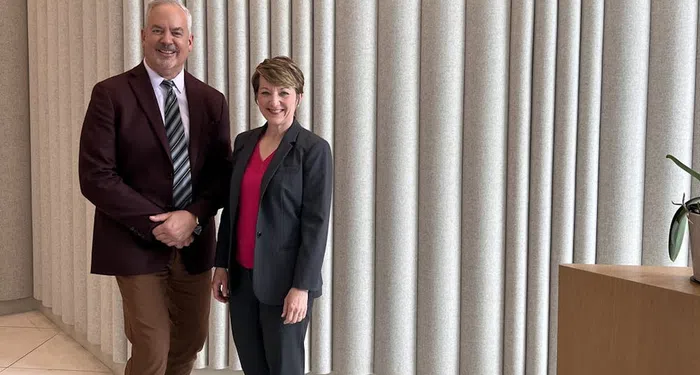
Stephen Macedo and Frances Lee
The Courage to Look Back at COVID
Two Princeton professors spent a year researching questions about the pandemic that almost no one wanted to touch — and wrote a refreshingly honest book.
Our latest guests avoid taking sides in the debate over COVID - and offer a refreshingly honest and informed take on the pandemic, our response, and how we can all do better next time.
Their names are Drs. Stephen Macedo and Frances Lee. They are both professors at Princeton. And together they authored In Covid's Wake: How Our Politics Failed Us.
The book pulls no punches. Nor does it advocate for any particular viewpoint, or curry favor with any party. All it does is lay out the findings from more than a year of dedicated research.
And those findings, I have to tell you, are quite eye-opening.
In this conversation, Drs. Macedo, Lee and I discuss:
- Why almost no one has gone back to look at the pandemic — there was never a commission, the way there was after 9/11, or the Challenger shuttle disaster
- How a response intended to protect the vulnerable so often did the opposite — piling hardship on essential workers, small businesses, and kids
- Why every crisis needs what they call a "Team B" — room for dissent, and more than one kind of expert at the table, not everyone rushing to agree
- Where they still find reason for hope — including the generation Stephen is betting on to finally make sense of what happened
Frances told me she wasn't sure anyone would even want to read a book like this. But she wrote it anyway, because she believed it needed to exist.
That is difficult and largely thankless work. To me, it is a crazy good turn.
Please enjoy this conversation with Stephen Macedo and Frances Lee.
- [04:53] The Book Almost No One Asked For: Why Lee wasn't sure anyone would want to read In Covid's Wake — and why she felt it needed to exist anyway.
- [07:34] Why We Look Away (This Wasn't The First Time): On the strange quiet that settled after the pandemic — and the echo of 1918, when the country did much the same thing following the Spanish flu.
- [14:47] No Commission, No Reckoning: We studied 9/11 and the Challenger. We never launched that kind of honest look back at COVID — and Lee explores why.
- [17:23] Who Suffered the Most: How a response framed as protecting the vulnerable, they argue, so often landed hardest on essential workers, small businesses, and our kids.
- [26:57] The Case for a "Team B" in Every Crisis: Macedo on what he calls an "effortful pause" — room for dissent, and a wider table than just the experts who already agree.
- [38:06] Reasons for Hope: Why Macedo thinks we will do better next time, and why he's bullish on students who were in junior high in 2020.
FRANK BLAKE: Well, I am thrilled to introduce as guests for today's podcast, Stephen Macedo and Frances Lee, who are the authors of a book called In COVID's Wake, which, when I read, I thought, wow, this is a crazy good turn because it turns both a fascinating book, but also holds a mirror up to all of us having lived through COVID as well as our society and the world in terms of how we responded. I can't imagine that that was an easy thing to do, but I'm hugely grateful and I think our listeners are going to be hugely grateful both for this conversation and the book and we'll be giving away some free copies of the book. So I'd like to start first welcome Stephen and Frances. Thanks very much for joining us.
STEPHEN MACEDO: Thank you for having me.
FRANCES LEE: Thanks for having us.
FRANK BLAKE: And I'd love for you to just give a quick summary of your background and then why did you take this as a topic for a book?
STEPHEN MACEDO: Maybe I'll start. I'm a political theorist principally, though, I've also written a lot on Constitutional Law, American Constitutional institutions, and schooling, ethics and public policy questions. I wrote a book on marriage and same-sex marriage and monogamy. And so I've written on a bunch of different public policy questions, never anything involving public health. And I was going to write a book on a broader set of topics basically with a focus of how I think progressives are not paying enough attention to the substance of insights coming from the political right on questions where the truth is not all on one side. So I was going to do COVID and abortion and immigration, but once I started with the COVID stuff and talking to Frances about it, it was clear that was more than enough, and it turned out to be a fascinating project to work on, on biggest global crisis since World War II, the worst pandemic in a century. And anyway, that's how I got into it.
FRANCES LEE: So I got into the topic working with Steve. My background before undertaking this book was American politics, political science, national politics and policymaking were the themes that I worked on in the field I affiliate with. I write a lot about party polarization and that was, of course, a key feature of how the pandemic response unfolded. And I got quite fascinated by the partisan divide that grew over time during the COVID crisis, separating red states from blue states, and even Democratic and Republican leaning individuals. And so that's where this topic intersected with my prior work. But I would say that I wouldn't have written this book without collaborating with Steve. I was skeptical just as you referenced at the outset as to whether there would be even interest in returning to this time period and thinking through what had happened, and it seems to have been a lot of silence around that. And so I had my doubts as to whether anybody would want to read such a book, but I felt like a book like this needed to be written. And so that sense of that there's just a gap here and that we need to respond to it was a motivation.
FRANK BLAKE: And you're both professors at Princeton, is that correct?
STEPHEN MACEDO: Yeah.
FRANK BLAKE: Let me start with a very general question. I think I know the answer to this, but I'll ask it anyway. Why do you think there haven't been more of what I ... And I would say for our listeners, you're very objective and apolitical in the way you approach the topic. Why do you think there haven't been more objective analyses of what happened to our institutions over the course of COVID?
STEPHEN MACEDO: I guess I could just offer a couple of things and then Frances can follow up. I think one thing is that it was an unpleasant experience for any people. People look back with anxiety, the memories of the fear that people had for parents of children and so on, I think it probably was especially difficult. Of course, for essential workers, though they wouldn't be the ones writing the books particularly, but they had to keep working in person during COVID. But I think for many people, this was a difficult period that they would rather leave in the rearview mirror. And then in addition, I think there's probably some partisan, well, or just regret perhaps or doubts that when we do look back, the great restrictions that were imposed, the sacrificing of human contact that was undertaken, the huge costs that were undertaken, there may be some suspicion that they weren't particularly worth it or that they didn't have the consequences that might've been hoped for. So there may be some doubt about that. And I think people probably do perceive, at some level, that there was a partisan side taking and a politicization here that undermined our learning over the course of time. So I think it's a complicated thing, but I think those are some of the reasons, at least.
FRANCES LEE: I agree with Steve's point and I think that they're both a key part of the turning away from the COVID period that we've seen among academics and analysts and historians and commentators. It's amazing the extent to which that whole period is just forgotten in our current discourse. I would say that this turning away bears a close resemblance to what happened after the Spanish flu of 1918. That also figures very little in the historical and cultural record of the time and the immediate aftermath that people just wanted to forget it, and then they did. So I think that's probably the great part of the explanation, but I also know that there are many academics who worked hard during the pandemic to collect data on what governments were doing around the world. And I think had those responses been shown in the data to have made a big difference, I think there would be a lot more academic publishing, at any rate, on this topic than we have seen. I think it's the null findings, the inconclusive findings, the sense of futility that one experiences as you review those data, that it's dispiriting. And so there's been a turning away for that reason also.
FRANK BLAKE: So one of the interesting, I take it, objectives of your book is to help us learn from our mistakes and then reading the book, and I feel like I followed the various discussions around COVID pretty closely, but I was surprised at the mistakes at the extent to which the mistakes were prefigured by analyses before COVID. Were you expecting the level of mistakes and I'll just call them mistakes, not give a reason for the mistakes one way or the other, but were you surprised by the level of mistakes or was that what you expected?
STEPHEN MACEDO: Yes, I would say that I think by the time we got around to writing the book, at least at that point, I think we had a judgment, or at least a preliminary judgment that the measures that were imposed, the very costly measures that were imposed perhaps hadn't worked, though we had to do the investigation to find out. I guess one of the things that really surprised me was just how extensive the pre COVID pandemic planning record was, as you alluded to. To go back and look and just to see that in November 2019, just weeks before the onset of COVID in the West, the World Health Organization was saying there are certain things that shouldn't be done under any pandemic no matter how bad; contact tracing, border closures, quarantine of exposed individuals. Johns Hopkins, in September 2019, just a few months before the pandemic, had looked at all of these non-pharmaceutical social distancing measures, mask mandates, again, the border closers, school closures, canceling public events and so on and so forth, and had rated the evidence for all of them weak or poor, uncertain, and warned that they would be costly. And even going back and seeing that there were these reports that said politicians may have an incentive to use these measures regardless, to show that they were in charge so that they were getting tough for political reasons, that is. So one of the astonishing things was just how much that was ignored. Perhaps not entirely, because there was a period in March when, as we write in the book, and even January, February, when the Chinese started to impose their lockdowns, when there was a lot of skepticism among experts. Anthony Fauci, in February, said, "I can't just imagine. I can't imagine we'd ever lock down New York or Los Angeles. It's very unlikely that this will work when the Chinese Wuhan lockdown occurred." And then lots of people pushed back in March. And as best we can figure, a wartime framing took place, took over. We all have to be in this together. We all have to be on the same page. We need wartime unity. That became the framing in April and May. And at that point, dissent became disloyalty, it seems, and the argument was shut down and people warned about the consequences of that and there was so much we could have learned from the experience of European countries and in our own case. Then we just not only did debate what was shut down, but we stopped learning. So those things, I guess the extent of that was shocking to me, for sure, to trace that story out, and very dispiriting, as an academic, where you would think that at least academics insulated from political accountability made independent in every conceivable way by virtue of our tenure and so on. Even so, a few academics raised their voices. Some did, but not nearly as many as should have been the case.
FRANCES LEE: I was surprised, looking back, to find so much prior work rather than being surprised by the mistakes that were being made, I was surprised that there had been so much work on this topic and that it was so contrary to what wound up being not just policy in the United States, but policy around the world, and also policy that was framed as expert led. The mantra was "follow the science". And so, one would think that if, in an environment like that, the body of scientific work would be conventional wisdom in the field, long-established, settled, none of that was true of the measures that were taken during the pandemic.
FRANK BLAKE: So just the ironies of this are so deep in the, just as I said, reading your book and going, "Gosh, actually, there was science prepared in advance and then "in the name of science", we said, "Yeah, okay, that's fascinating, but we got to show we're in charge." That's my readthrough. Is that a fair readthrough?
STEPHEN MACEDO: Yes. A mantra could have been, I guess, "ignore the science" as a matter of operative detail, at least as the science had accumulated prior to the crisis. And one would've thought that in the midst of a crisis with panic going on, one would want to pay attention to the sober recommendations that had been done in a calmer moment in advance.
FRANK BLAKE: So do you think we are in the process of coming to terms with the scope of the mistakes made?
STEPHEN MACEDO: Frances, do you want to take that one?
FRANCES LEE: No, I really don't think we are very. I wish I could answer in the affirmative, but I don't think that, that is the case. I do think that there is a ... I think if we were to talk to average people, I think they would look back and say, "Oh, that was a crazy time." I think that might be conventional wisdom among the public, but in terms of a reckoning among experts in expert agencies or in academia, no, there hasn't been. Just a little. There haven't been the conferences, the lookback. There was never a commission created as had been done after prior crises such as 9/11 or the Challenger explosion. One might investigate the response in a serious way using that kind of framework, and yet, there's no impetus to do it. I think one point to make here is that it's no one's political interest to do it, that we all participated all the major institutions of society coalesced in supporting these approaches, academia in the lead and taking a harder line than most such institutions, but it was basically all elite institutions and it was global, not just confined to the United States. So I think that the sheer scale of the policy errors is just hard to take in, hard to look at.
STEPHEN MACEDO: We have seen some cracks in the facade, I guess you could say. We've had a fair number of invitations from universities and podcasts and so on. And we've had many people tell us that looking at the book, the things that we've been discussing that were surprising to us, all those pre COVID pending planning guys, other people have found that surprising, too. And so I think there have been a number of people who have begun to rethink this thing, not only because of our book, because of other things, as well, including recognizing that there's no dramatic difference between the outcomes at various places that did and didn't. And Sweden turned out to do quite well. Some of these things are difficult to overcome, but we'll see. Our book has had a steady amount of attention over the course of over a year now, and we've been delighted by that, not because it's our book, but because we think the topic is important. And indeed, we feel like we've just scratched the surface. There's so much more to be investigated and considered.
FRANK BLAKE: The other thing, there are many things that were striking about your book, but one of them in terms of coming to terms with it, is how our approach, and again, you say not just ours, but how the approach singularly negatively impacted the economically disadvantaged in children, which just, again, you reflect on it, we all participated in this, but you reflect on it, you realize the truth of that is, that part of why we don't want to hold the mirror up to ourselves, that this not only was should we have known better because of all the pre-planning, but that the lurches that we took seemed, from your book, systematically to disadvantage the least advantaged.
FRANCES LEE: And we wanted to believe that our response was virtuous. It was a highly moralized response that we're putting human life first ahead of the economy that we're going to do the right thing to save lives even at great costs. So that was the framing, the way in which we understood the policies that were undertaken. And so it's difficult to accept that instead that rather than protecting the vulnerable, we might have been ... And in fact, when we review the policies, it's quite clear we were piling more disadvantage on the disadvantaged. Overlooked to a great degree during the crisis was the large share of people who had to continue working in person right through the pandemic just as they always had. About a third of the workforce were essential workers. We are asking them to face the risks, and in doing so that they are largely serving and protecting people who are higher up on the income scale better off than they are. Their kids, in turn, couldn't go to school. We had more than 20 million people lose their jobs in April of 2020, and that people who were losing their jobs were disproportionately service sector workers who were not highly paid, and it would take many months, in many cases, for those people to even get unemployment benefits given how overwhelmed the systems were. Great hardship inflicted. Many, many small businesses went under and they were not made whole, even despite the large aid packages that were passed to try to mitigate the economic fallout, that it was great and extensive. And so it's just hard to face that what we did made things worse for so many people.
STEPHEN MACEDO: I do think that the effects of the school closures are the one aspect of the cost that seems to be the broadest acknowledgement of. It's so hard to deny a doubling of chronic absenteeism now one third of students in K-12, a learning loss that simply can't be denied. And also, just I think, a large policy shift. We have friends who work on school reform issues, publicly funded school choice questions, for example. Every Republican state now has a publicly funded school choice program to channel some public monies to private schools that compete with public schools. That's just a huge turnaround in American public policy from 10 years ago when school choice advocates were making very little progress as they, themselves, would say. So I think that this aspect of it is just hard to deny. And I think there were also, we come across many parents in blue cities and blue states who were trying to get the schools open, who wanted, because their kids were suffering so much, were looking at the evidence and were confident that schools could reopen safely, which was the case. Schools in Europe reopened in April and May 2020. European education ministers put out a statement in May 14th, 2020 saying, "Our schools have been open for three or four weeks. We're not having any problems." This was not reported in the United States at all. So I think the school thing is indeed undeniable in a way. And I guess that last point also makes me realize that journalism also played a very significant role here. It's simply the case that the journalists echoed the fear and panic in a way that predominated in much of the country, did not push back, did not look soberly at what was going on in other countries, did not look for evidence of a contrary nature. They fanned the flames of panic and constantly asked things like, "Why aren't we considering a national lockdown?" And so on. So the elite media, I think also played a significant role here. And with some exceptions, we've had some good media reactions from actually the New York Times Daily Podcast and the PBS NewsHour, William Brangham, had really read the book and we appreciate that. The media has not been nearly as self-critical and reflective as they should be.
FRANK BLAKE: Not much self-reflection there.
STEPHEN MACEDO: No.
FRANK BLAKE: Just a question on my mind is you rightly point out, I think, the danger of putting public health officials in charge of an issue like this because they have one single focus, public health, and they're not looking at the broader set of costs. When you look back on this, do you think that, that was more driven by the public health officials desire to accrete significance or by the rest of the public institutions just saying, "Yeah, we don't want any part of this decision-making process. We're going to defer to somebody else and call them an expert."
FRANCES LEE: I think there was a great abdication during the crisis in along exactly the lines that you outline here that elected officials wanted to be able to say that what they were doing was science-based, that they were not exercising personal discretion. That instead, what they were doing was what the experts instructed them to do, and so they put public health officials out front. They would do the press conferences with them, they would ask them to speak and endorse the policies. So yes, they were hiding behind expert advice in that way. They disavowed their own responsibility for making those decisions in the context of uncertainty. Nevertheless, I do think public health deserves some share of blame here in that there was considerable controversy around these measures in the public health field before 2020. And so why was that not voiced? Why did skeptics fall silent during that time period? We know that there was dissent. Our book traces the dissent that existed in March of 2020 in the field experts, and then they just go quiet. So you might say that it was serving everyone's interest, to some degree. I think many public health officials enjoyed the attention, the visibility, the power that they wielded during that time, those who had doubts did not voice them, those experts who had doubts did not voice them. And meanwhile, politicians were able also to avoid accountability, avoid blame by saying that they were merely following the science. And journalism reinforced that. One of the really striking features of the coverage of the time is that journalists would write about decisions about closing schools or closing businesses saying the virus closed things as if there was no role for policymakers.
FRANK BLAKE: Well, that's an interesting point.
FRANCES LEE: It hadn't previously been done in crises on anything like this scale. There had been some closures of churches and of theaters in 1918 in some cities. There was no national policy along those lines. And then, of course, that had been criticized in the subsequent literature that whether those closures had made any difference for mortality is not at all clear from the data from 1918. And so there was work on that, that could have informed policymakers in 2020.
STEPHEN MACEDO: I guess I would just add one thing, which is, of course, there were a few dissenters and they were typically not treated well at all. People now know about the story of Dr. Jay Bhattacharya and two others, a Harvard scientist and a Oxford scientist who warned in October 2020 about the profound costs of the school closures and the other measures and suggested that there were other strategies that we should rethink. Frances Collins, the head of the National Institute of Health, one of the most powerful science people in the world called them fringe conspiracy theorists and helped orchestrate a campaign of character criticism, I guess I'll say, behind the scenes. Dr. Scott Atlas at Stanford University advised the Trump administration. He also was a policy dissenter. He had evidence. He read a lot of empirical work. He had published five public health textbooks. He may not have been right about everything, but he had a perfectly respectable scientific background and making arguments that just echoed the pre COVID pandemic plans. And the Stanford Faculty Senate passed a formal censure motion. I think the only time they've done that.
FRANK BLAKE: Done it.
STEPHEN MACEDO: Stanford history. Stunning.
FRANK BLAKE: Just stunning in retrospect.
STEPHEN MACEDO: Yeah, stunning in retrospect and they still haven't withdrawn it.
FRANK BLAKE: Oh, interesting.
STEPHEN MACEDO: There's been a motion to withdraw, formally withdraw that measure and it hasn't quite passed. So I think there's been remorse about that institutionally at Stanford, but there hasn't been any real facing up. So yeah, it is surprising. There were people who stuck their heads up and sought to object, but many of them were treated quite intolerantly. Some lost their jobs. There have been some lawsuits subsequently. A fellow in Texas was expelled from medical school and has recently won a suit. So we need to revive the belief intolerance and respect for dissent if we're going to get through something similar in the future and course correct along the way.
FRANK BLAKE: So that is one of my takeaways from your book that for the future, first decision making needs to be more balanced public health, but also look at other consequences of decisions also longer term in nature, but that you need a team B that is open to debating issues and that would've been very helpful. Is that the right reading of one of your core recommendations?
STEPHEN MACEDO: Yes. We quote Graham Allison, one of the world's leading scholars of crisis decision making, wrote a book on the Cuban Missile Crisis and Decision Making in the Kennedy White House. He put out a document in April 2020, the Harvard Kennedy School Belfer Center, arguing exactly that, that we were doubling down on the strategy. We hadn't sufficiently questioned it. The assumptions were highly questionable about whether these measures would be effective, pointed out they would be costly, and that the consensus was forming prematurely and that we needed a team B. We needed a wider group of experts involved to shape the policy, not just epidemiologists and public health scholars, but we needed a wider group of experts involved. He said all the right things, in effect, and a few others did, as well. He was completely ignored. Another report from Harvard that fulsomely endorsed the lockdown strategy got quite a lot of report just prior to that, but that was ignored. So certainly I think that is one of the takeaways. We've looked back on documents from decades ago, including reflections on the Vietnam War and the extent to which information was not being passed along up the chain of command and there wasn't enough debate going on in the White House, and subsequent wars, as well. And yeah, this has indeed been one of the important takeaways, that there needs to be an effortful pause that we need to be open to dissenters and that we need to make sure that minority voices are being listened to. I guess I would just add, we came across a document from 2001 written by a scholar of public health towards a public health ethics. And she has six recommendations in there, including the sorts of things we've been talking about. Be open to dissent, have a Team B, listen to minority voices, make sure that you pay attention to the evidence that's being offered by minority voices, and be very reluctant to impose mandatory measures unless you're extremely confident about the evidence and so on. And looking back on that document from 2001, we ignored all of the things that were put forward by public health ethics back then. And surprisingly enough to us, the author of that document seems not to see that as vividly as it seems to us, but I think that's what you've just said is something very important that is a takeaway for us, as well.
FRANCES LEE: Yes. The policy advising processes that form ad hoc around executive decision makers who were wielding emergency authority, both nationally with the cobbling together of the coronavirus task force, as well as similar such bodies around governors throughout the US. And then it's mirrored around the world. They had a particular character. They brought in experts in infectious disease and epidemiologists, and then they had just generalist government officials. That's basically what they were comprised of. So elected officials and then infectious disease experts. So it's very skewed. It's a recipe for a kind of tunnel vision where you only see one aspect of the crisis rather than understanding the society-wide nature of the crisis. So that was a common problem around the world. But I would also say that it's not just a matter of having diverse experts in the room, though that is very important and dissent among experts is needed, but there's a problem there of class bias that well off people, knowledge workers, experience the crisis very differently. They could continue to do their jobs and continue to get paid, and it's very easy for them to miss the harms that are being inflicted on people not like themselves. And so that's where you need representative government and that's where voices of people who are not so well off need to be brought in and need to be incorporated, need to be heard. The ways in which legislatures and legislative bodies just sideline to themselves during the crisis. That's another kind of abdication where they're not playing the role in policymaking of bringing diverse perspectives from the society to bear in policymaking. Now I say that, it's true that that's characteristic of the crisis overall, but I would say that if you're looking to national government, where dissent first began to emerge in power among people with political power was inside the Congress. Demands to do investigations into how school closures were affecting students with disabilities, these kinds of demands, criticisms of the policy response are Senator Rand Paul's investigations into the origins of the virus. That's Congress and our legislative bodies playing their traditional role and we needed more of that as well as more diversity among expert voices.
STEPHEN MACEDO: And you'd think- Yeah.
FRANK BLAKE: I'd say what Frances is indicating is the oldest idea almost in American Republic of checking and balancing.
STEPHEN MACEDO: Right.
FRANK BLAKE: Checking experts, more diverse arrays of experts and balancing. Balancing the perspective of experts by that of ordinary people who are less elite. This is a fundamental idea of the American Constitutional Republic and it's just those kinds of basic values and basic lessons that we seem to ignore in this experience.
FRANK BLAKE: And do you think it was the framing of the issues as like a war or existential threat? Is that what led us so quickly to clear the table of all these time-honored checks and balances and respecting other viewpoints and see-
STEPHEN MACEDO: Yeah, that was it, but also partisanship. I think the fact that Donald Trump was on the ballot in 2020 was part of it, but just a very strong partisan divide. The American Pediatric Association over the summer put out a statement advocating that schools should reopen, and then President Trump came out and said, "Schools should reopen," and then they changed their position. We actually didn't note in the book that when the protests around George Floyd took place over the summer, thousands of public health officials signed a document saying, "Oh, it's okay to gather in public and to protest because racism was also a public health issue." Well, fine, make trade-offs and consider the cost of not allowing people to gather, but why only for that issue? Several people have told us and it's something we missed in the book that that was the point at which they knew the whole thing was political and that the value choices that people were making in various settings were not being explained properly to the public. And of course, we saw all the hypocrisy that went on around various people going out for fancy dinners and so on while urging the public to stay home. This was true of many, not just Gavin Newsome in a famous case, but Deborah Burks and Neil Ferguson in the UK, and quite a number of others. So I think the politicization was also there. People chose sides and stuck to their sides loyally rather than engage in independent thinking.
FRANK BLAKE: So I could go on forever on this, but I've got a couple of other questions. One question is, as you look at it, I was struck by, to me, one of the turning points was when the comedian John Stewart finally made the obvious point of; you got a Wuhan COVID lab and an outbreak in Wuhan of COVID is like some chocolate related disease breaking out in Hershey, Pennsylvania, and you go, "Yeah, I mean, that's so obvious and funny." And yet, in the run-up to that joke, it was yeah, Wuhan can't possibly be the source of it. And now this is more the public citizens. Why do you think we were all just swimming along in the same river so willingly?
FRANCES LEE: It is interesting now that most Americans, it's like two thirds of Americans believe that COVID likely originated in a lab, and yet, this is still a very controversial issue among academics. There is no smoking gun evidence to settle the question one way or the other, but among academics and academic scientists, I would say that the view that it originated in the lab is still a minority perspective.
FRANK BLAKE: But they'd be hard-pressed to rule it out now.
FRANCES LEE: Yes.
FRANK BLAKE: Where it was absolutely a kooky, wackadoodle point of view at the start.
STEPHEN MACEDO: Yeah, that certainly is true. We've spoken at several, a number of universities now, and we've on a couple of occasions met and been with scientists who are quite expert in this area, including in the relevant research whose work is adjacent to or involves gain of function research as was going on in the lab. And we've asked those scientists who know the relevant players here reflecting back in particular on the scientists who, in January 2020, emailed Frances Collins and Anthony Fauci and Jeremy Farrar in the UK saying, "We've just come across papers. We think we've seen the genetic sequence of the virus. We think it's very likely that this is the result of a lab incident." And then those scientists, after a phone call that was hastily arranged, changed their public position and published an article saying, "Oh, no, no, it's very likely it came from nature, not the lab," while sending each other email messages that we now have saying it's just so likely it came from the lab. It's just so frigging likely. I hate it when science is politicized and so on." So we've asked scientists at major universities, "Do you think those scientists who changed their position in January, February are telling the truth in changing their position?"
"Man," they said, "very nice people, but no, we don't think they're telling the truth."
"Would you say that in public?" These eminent scientists at major uni.
"No, we wouldn't say it in public." So I think, and Frances and I both know, people aren't willing to speak up. The worst pandemic in a century killed arguably 20 million people in the world. It involved research that the US government was helping to fund, not clear that we created this particular virus, but we were funding this kind of research on bat corona viruses in that lab in Wuhan, and people aren't willing to come forward. The Republicans have done some good work in the House and Senate and Senator Paul, as Frances said, has been pursuing this issue doggedly, but this kind of research continues to go on around the world. It's not a matter of pure historical interest merely. It's also the fact that this research remains dangerous and is subject to inadequate public inspection and public awareness and international regulation.
FRANCES LEE: This research was controversial before COVID, and there was a moratorium on this research in the Obama years. And so it's quite interesting that there's been so little discussion of this issue that was controversial on a longstanding basis before COVID. So there's been a real circling of the wagons in virology around this topic so that what was controversial before COVID is no longer controversial, despite the fact that there's legitimate concern that the COVID pandemic may have been a consequence of this kind of research.
FRANK BLAKE: So a general question. Five years from now, do you think it is more likely that the books and analyses on COVID reflect the balanced judgment, we need a Team B, we need less politicization, those sets of judgments in your book or more likely that it be, we'll say, the political elites drawing the conclusion that the citizens failed them?
STEPHEN MACEDO: I'm going to go with the former.
FRANK BLAKE: All right.
STEPHEN MACEDO: Be optimistic. I just think, as Frances indicated before, we're now six years on and there are plenty of people who have pushed back against us and who want to think that we did the right thing, we did the best we could, but the absence of evidence of significantly reduced mortality from these measures, not just across the 50 states but across Europe individual examples that are hard to explain is just pretty vivid at this point. And I do think that we've seen one group that's quite responsive, which is undergraduates who were in junior high school when this whole thing went down. I think as they come to the fore, they'll want to understand better the causes and effects of these matters. So I'm going to go ahead and place my bet optimistically on expert opinion moving in the direction of greater acknowledgement of the realities that we've been talking about.
FRANCES LEE: I agree with Steve, even though I tend to be a little bit more of a pessimist in these matters than he is, but I would say I think it's also going to be a niche topic. I think that there will also be the same kind of turning away from the crisis that we saw after the Spanish flu, and that there'll be some historians and social scientists who are interested in these themes and who know this history, but I think it will be, to a considerable degree, forgotten among academic experts, that it will be a topic that'll be a small field, a niche interest, no large scale reconsideration, I suspect, is likely to occur in the foreseeable future. That's where I think that, that's where we are and are likely to go.
FRANK BLAKE: I think I put my money there, as well. And one of the reasons why I think you both have done a crazy good turn for the country, because this is not something that everybody was saying, "Gee, we want somebody to hold a mirror up to our institutions and ourselves, but it's incredibly important to do so." I ask every guest we have on this podcast, the concluding question, which is, and this doesn't have to be on the topic of COVID, it's just in your lives. Who has done a crazy good turn for you?
STEPHEN MACEDO: Well, I'm going to say that my co-author has done a crazy good turn for me by being willing to write this book. I never could have done it without her, or at least it would've taken a lot longer. It wouldn't be half as good. And Frances is both a brilliant scholar, but an incredibly nice person, and she's been very fun to work with. And this isn't, as you say, as you alluded to just a minute ago, this in a way isn't the kind of topic you want to deal with all by yourself. So it's been good to have a partnership on this and I'm very grateful to Frances.
FRANCES LEE: I feel the same way about Steve that your question immediately prompted me to think of that. So it's sort of funny. Steve goes first and he gets to offer that answer, but I feel the same way. I know that I would never have written this book on my own and it's been great to collaborate. We bring different strengths and different backgrounds to these topics, so I think that we're complimentary in the way we approach the topic. I would say also, I work in a field where I continually feel indebted to other great people who've worked on my topics, the students I work with. I just finished up teaching a class this term. It's a course on congressional politics, which is my main area of specialization. And I've taught that class for 20 plus years before I had a graduate student, his name is Rob Oldham, who completely rethought how the class should be taught and it's reaching students in a new way. I've continued to teach it the way that he pushed me to rework the class, and so I benefit tremendously from that. It goes the opposite way. We usually think about the ways in which we help our students, but our students help us, too.
STEPHEN MACEDO: I agree with that as well. I'll also echo that second point,
FRANK BLAKE: Which is terrific. You should know that very frequently, we've been doing this for 10 years, this podcast. Teachers very often are the answer on who's done a crazy good turn for you. So it's interesting to get teachers who reflect it back to the students. So thank you. And thank you both for just a really excellent book and encouraging all our listeners to buy it and we'll give away 25 copies. And it's a terrific book and well-researched and well-written and a fascinating book. Thank you.
STEPHEN MACEDO: Thank you so much. We really appreciate it.
FRANK BLAKE: No, great. Thank you. So we're good. I will say I didn't ask one question because there's a chilling quote in your book about lies leading to more lies. I don't know, do you have a comment? I realized I forgot to ask that question. Is that something you're comfortable answering or?
STEPHEN MACEDO: Well, we could very briefly, that's from Sissela Bok.
FRANK BLAKE: Yes.
STEPHEN MACEDO: And that was a big book. She was married to Derek Bok who was President of Harvard.
FRANK BLAKE: Right.
STEPHEN MACEDO: She was an ethicist at Brandeis, and that was a major book when it came out in the wake of Vietnam and Watergate and so on. And she's clearly right. Once you start fibbing, not telling the whole truth on something, then you have to start filling in other details, which are also not true, backstopping, avoiding the topic, obfuscating at the very least. And I think we have seen that around the lab origin issue in particular, but also just with respect to the consequences of the measures, the lack of effectiveness.
FRANK BLAKE: The masking, the school closures, you can go down the list.
STEPHEN MACEDO: Yeah. And what we mentioned about those scientists, now the avoidance itself not wanting to face up to these things is a way of misleading people by just not being willing to acknowledge what seems obvious. And of course, we're not fulfilling our responsibilities as academics, as researchers, if we're not willing to address these hard questions. But yeah, starting with the origins issue, I think there are a lot of people that are sincere out there that sincerely believe that somehow the measures must have worked. And again, they involve personal sacrifice on their part, a lot of personal dedication and have a difficult time facing up with the possibility that they didn't work. We certainly found resistance in people acknowledging simply the lack of evidence at this point for effectiveness. There's some sort of psychological self-protection going on, I think, on the part of many.
FRANK BLAKE: All right.
STEPHEN MACEDO: Well, thank you so much.
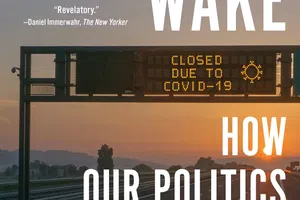
Enter to win a FREE copy of 'In Covid's Wake'
We're giving away 25 copies of 'In Covid's Wake' to our listeners. Click the button below to enter for your chance to win.
From Frank Blake
My Sincere Thanks
Your support has helped take our little idea to celebrate generosity and good deeds and turn it into one of the most-listened-to podcasts available.
Thank you for being part of a community that celebrates people who do good things for others.
Please help us continue to grow by subscribing on your preferred podcast platform and sharing our show with friends.